
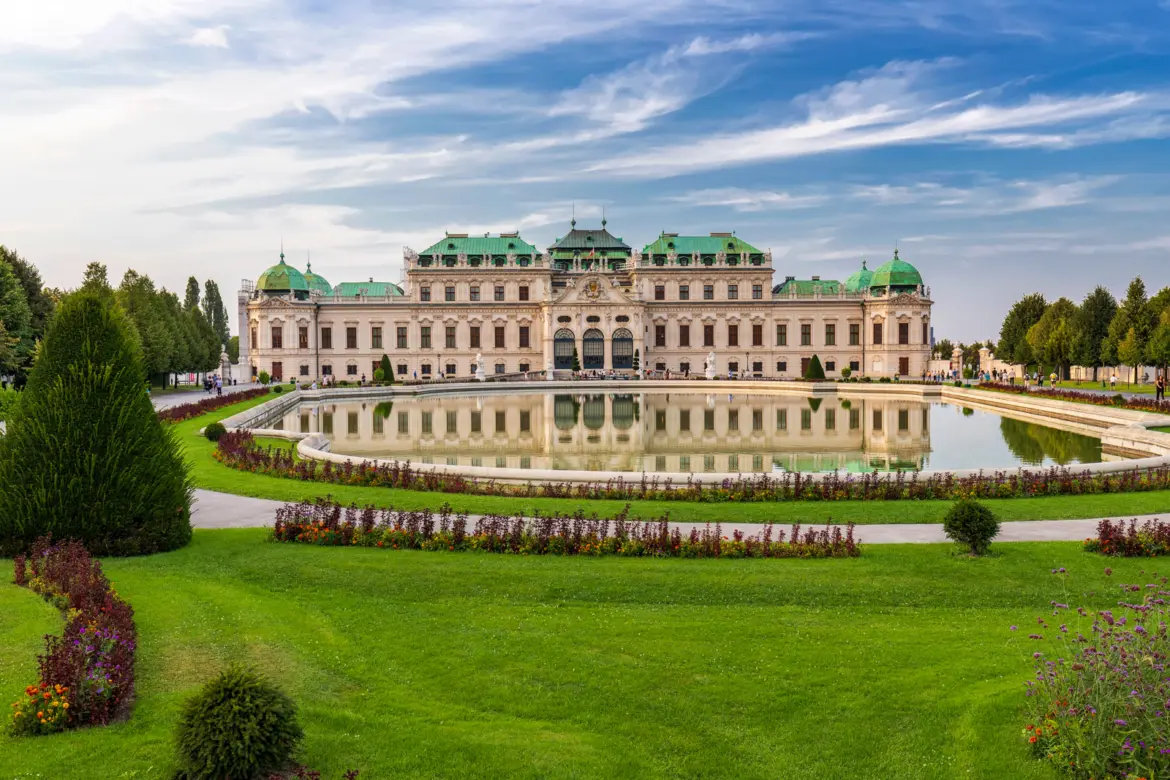
Hello my friends! There are places in Vienna where history feels distant, preserved behind museum walls and formal façades. And then there are places like the Belvedere, where history unfolds around you – in open gardens, along sweeping paths, and through architecture that feels both grand and surprisingly intimate. From the moment you approach the Belvedere Palace, you are drawn into a world of symmetry, elegance, and quiet beauty that captures the essence of imperial Vienna.
Unlike many of Vienna’s palaces, the Belvedere does not feel enclosed or overwhelming. Instead, it invites you to wander, to pause, and to take in the view – a place where art, nature, and history come together in a way that feels both refined and deeply personal.
Belvedere Palace at a Glance
🏛️ Built for: Prince Eugene of Savoy — designed by Johann Lukas von Hildebrandt in the early 18th century
🎨 The Kiss: Gustav Klimt’s masterpiece, displayed at the Upper Belvedere — gold leaf, tenderness, and the Vienna Secession in one painting
🌳 Gardens: Free to enter — terraced French-style gardens with fountains, sculptures, and one of Vienna’s most iconic reflecting pools
🏛️ Lower Belvedere: Marble Hall and Golden Cabinet — intimate Baroque interiors reflecting Prince Eugene’s refined personal world
📜 1955: Site of the signing of the Austrian State Treaty, restoring Austria’s sovereignty after WWII
🎟️ Tickets: Gardens free; Upper and Lower Belvedere require tickets — book online in advance
📍 Location: Prinz Eugen-Straße 27, 1030 Vienna — easily reached by tram, train, or a walk from the center
💡 Tip: Start in the gardens and walk from the Lower to the Upper Belvedere — the ascending perspective is how the complex was designed to be experienced
A Palace Built for Power and Vision
The Belvedere was commissioned in the early 18th century by Prince Eugene of Savoy, one of the most celebrated military leaders of his time, and designed by the renowned Baroque architect Johann Lukas von Hildebrandt. Rather than serving as a royal residence, the complex was conceived as a summer home – a place of leisure, prestige, and display that reflected both Prince Eugene’s extraordinary success and his refined artistic sensibilities. At the time of its construction, the Belvedere stood just outside the city gates, giving it a commanding position overlooking Vienna and enhancing its dramatic visual impact.
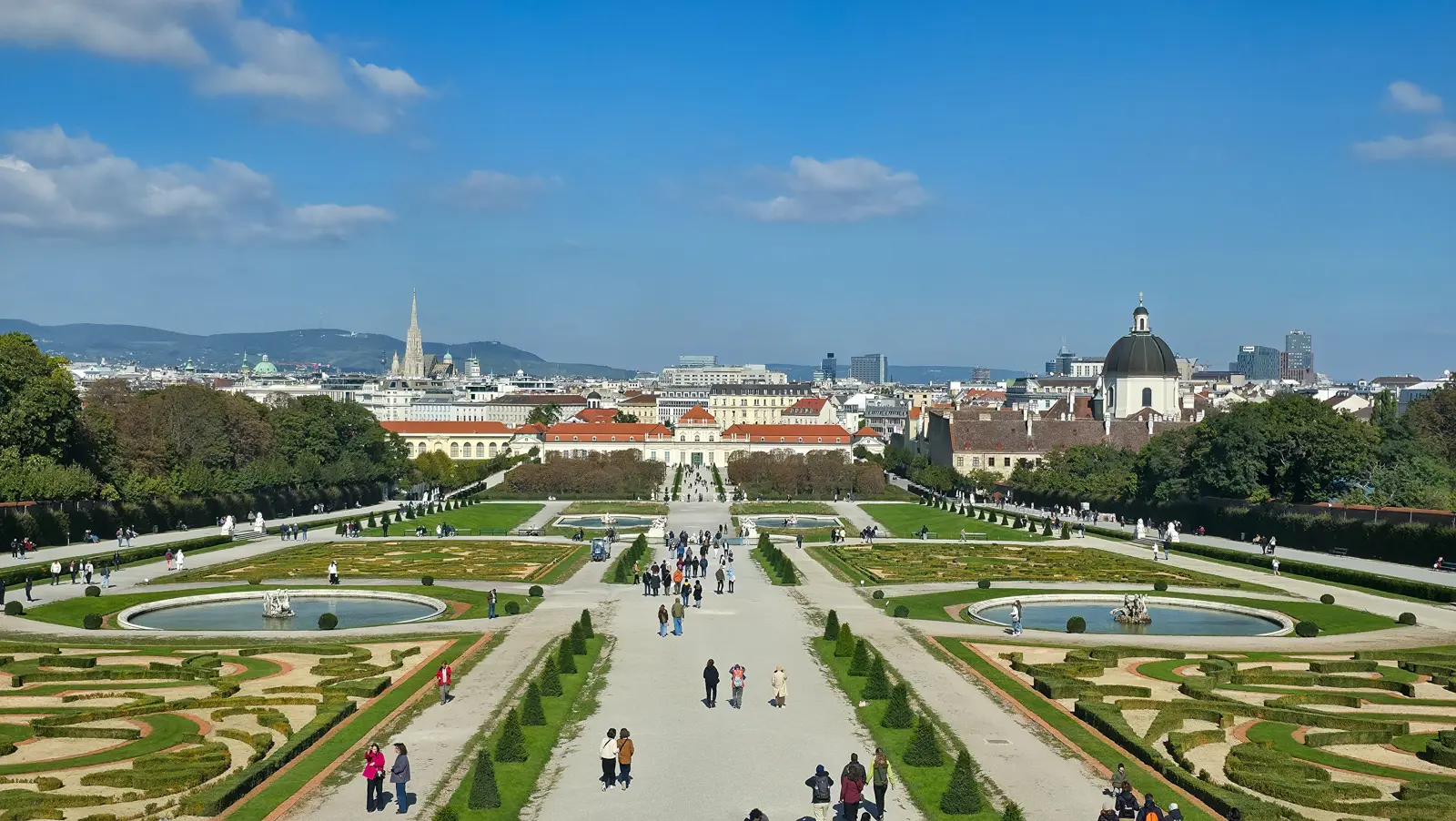
The design consists of two main palaces, the Upper and Lower Belvedere, connected by a vast formal garden that stretches along a carefully planned axis between them. This layout is not only visually striking but also deeply symbolic, emphasizing perspective, order, and harmony, all defining elements of Baroque design. As you move through the grounds, it becomes clear that every line, every elevation, and every view was intentionally composed to create a seamless experience of grandeur and balance.
The Belvedere’s story did not end with Prince Eugene. Following his death in 1736, Empress Maria Theresa acquired the complex and transformed the Upper Belvedere into one of the earliest public museums in Europe – a remarkable expression of cultural patronage. Centuries later, the palace would once again enter the history books when it became the site of the signing of the Austrian State Treaty in 1955, restoring Austria’s sovereignty after World War II and marking one of the most significant moments in the country’s modern history.
The Gardens: A Masterpiece of Symmetry and Serenity
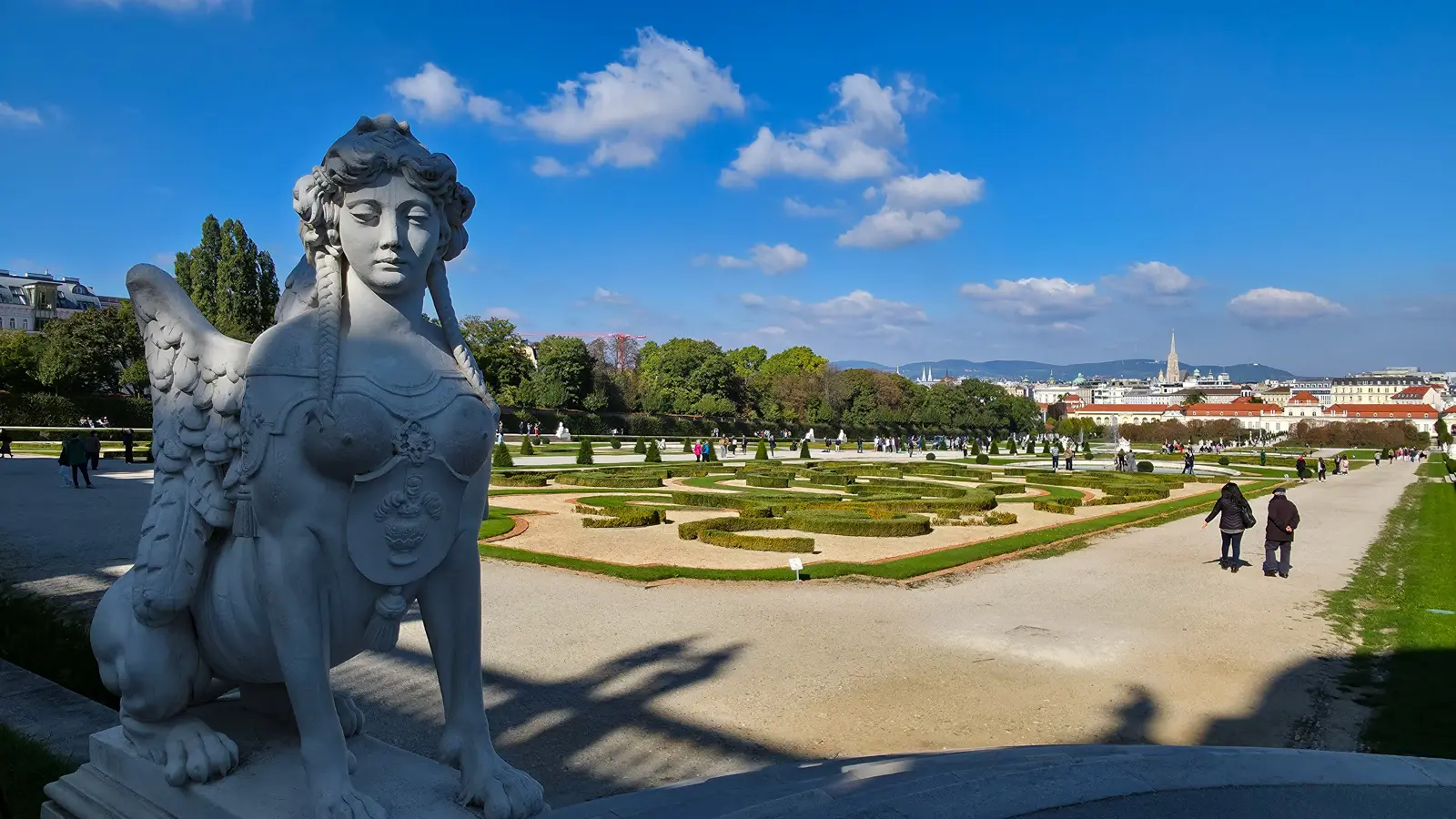
One of the most unforgettable aspects of the Belvedere is its gardens, which are as much a work of art as the palaces themselves. Designed in the formal French style, the gardens unfold in a series of terraces, fountains, and sculpted pathways that guide your movement through the space with remarkable precision. As you walk from the Lower to the Upper Belvedere, the view gradually opens, revealing a perfectly aligned perspective that draws your eye toward the palace above. Statues line the pathways, fountains add movement and sound, and the changing elevation creates a dynamic yet harmonious experience.
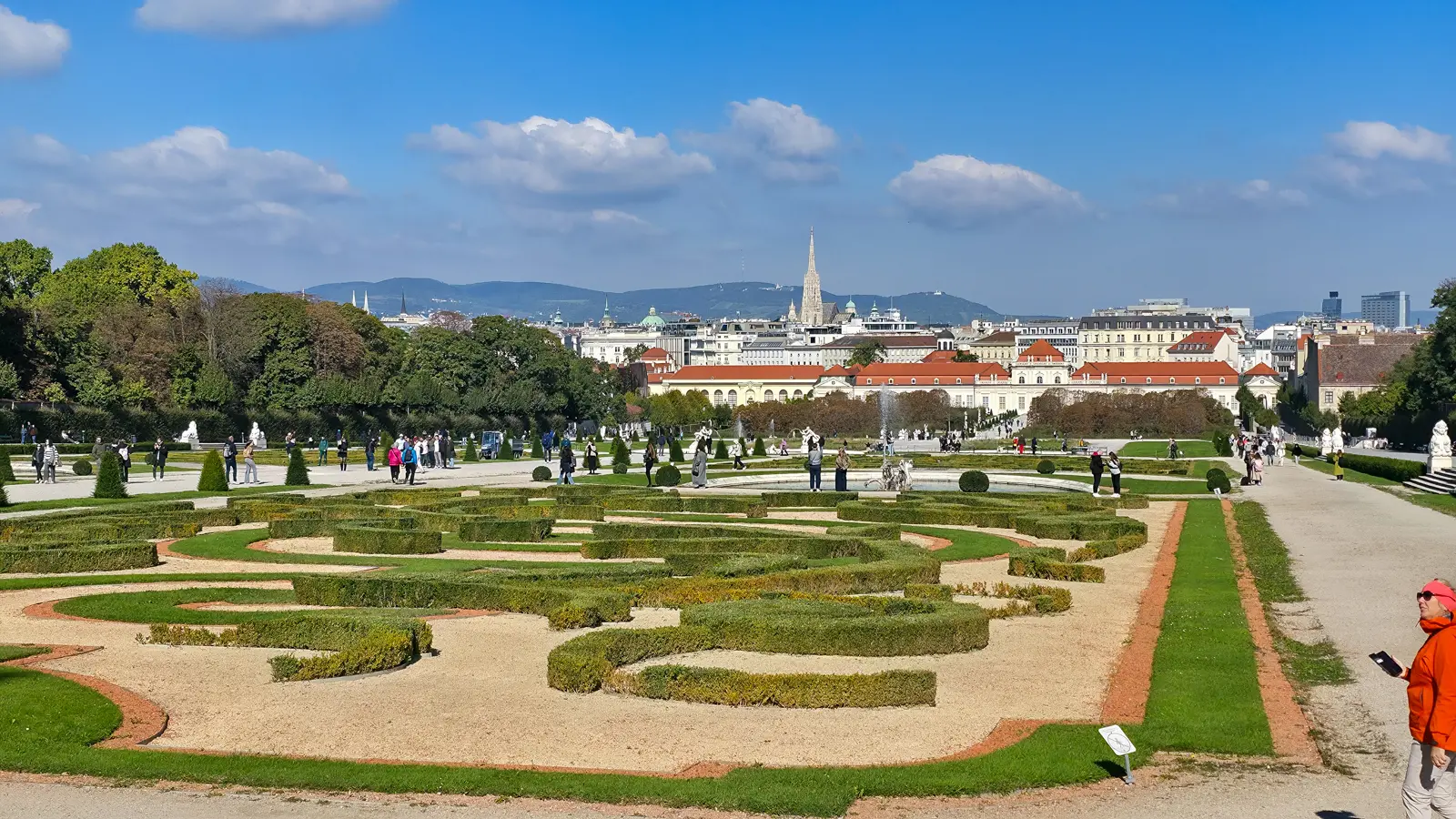
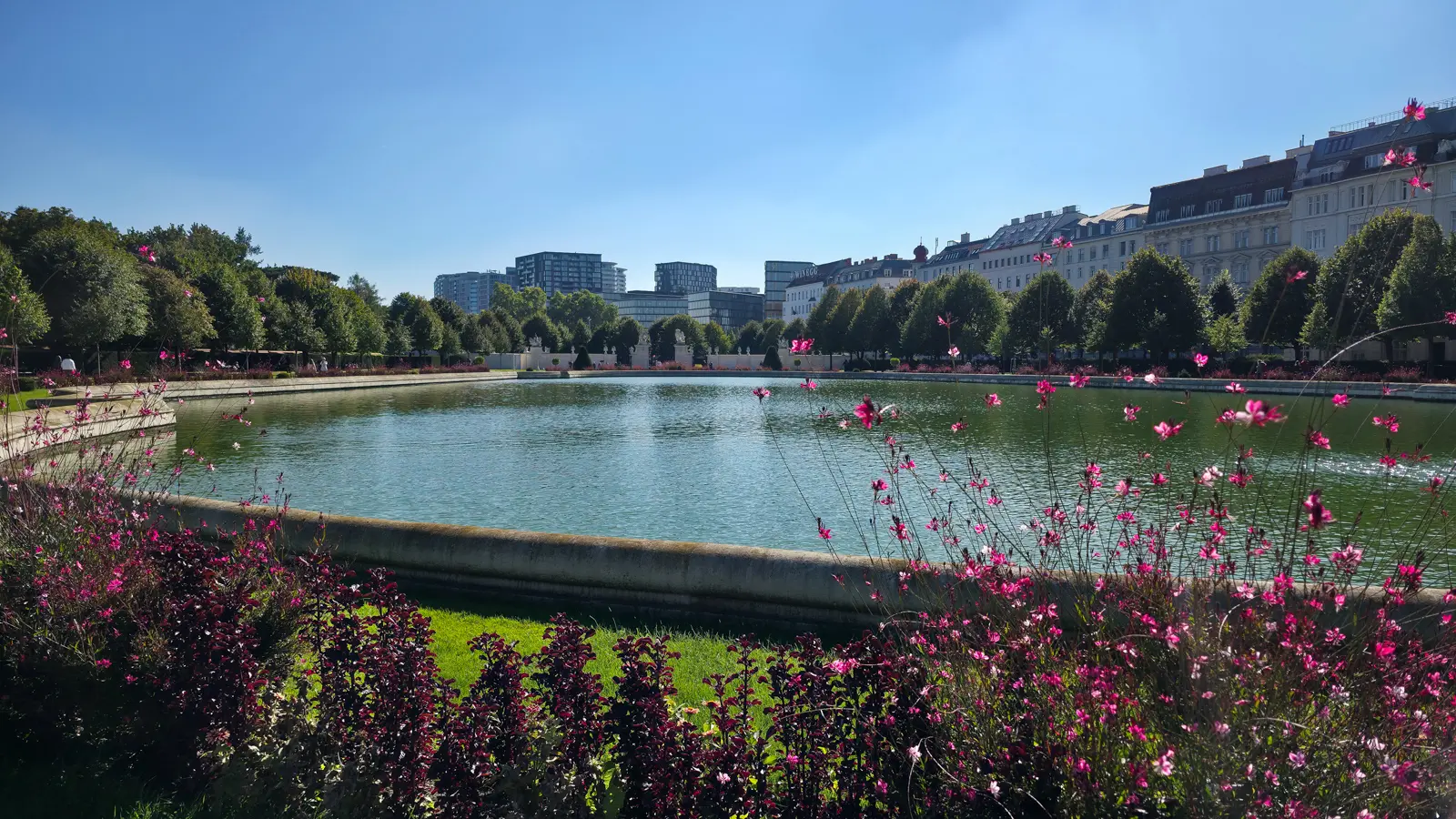
Beyond this central axis, the landscape softens. In front of the Upper Belvedere, a large reflecting pool mirrors the palace façade, creating one of the most iconic views in Vienna. To the sides and around the complex, more relaxed green spaces unfold, where locals and visitors alike pause, sit, and enjoy the surroundings. These areas feel less formal, offering a gentle contrast to the structured gardens and reinforcing the sense that the Belvedere is not only a place of imperial design, but also a living, accessible space within the city.
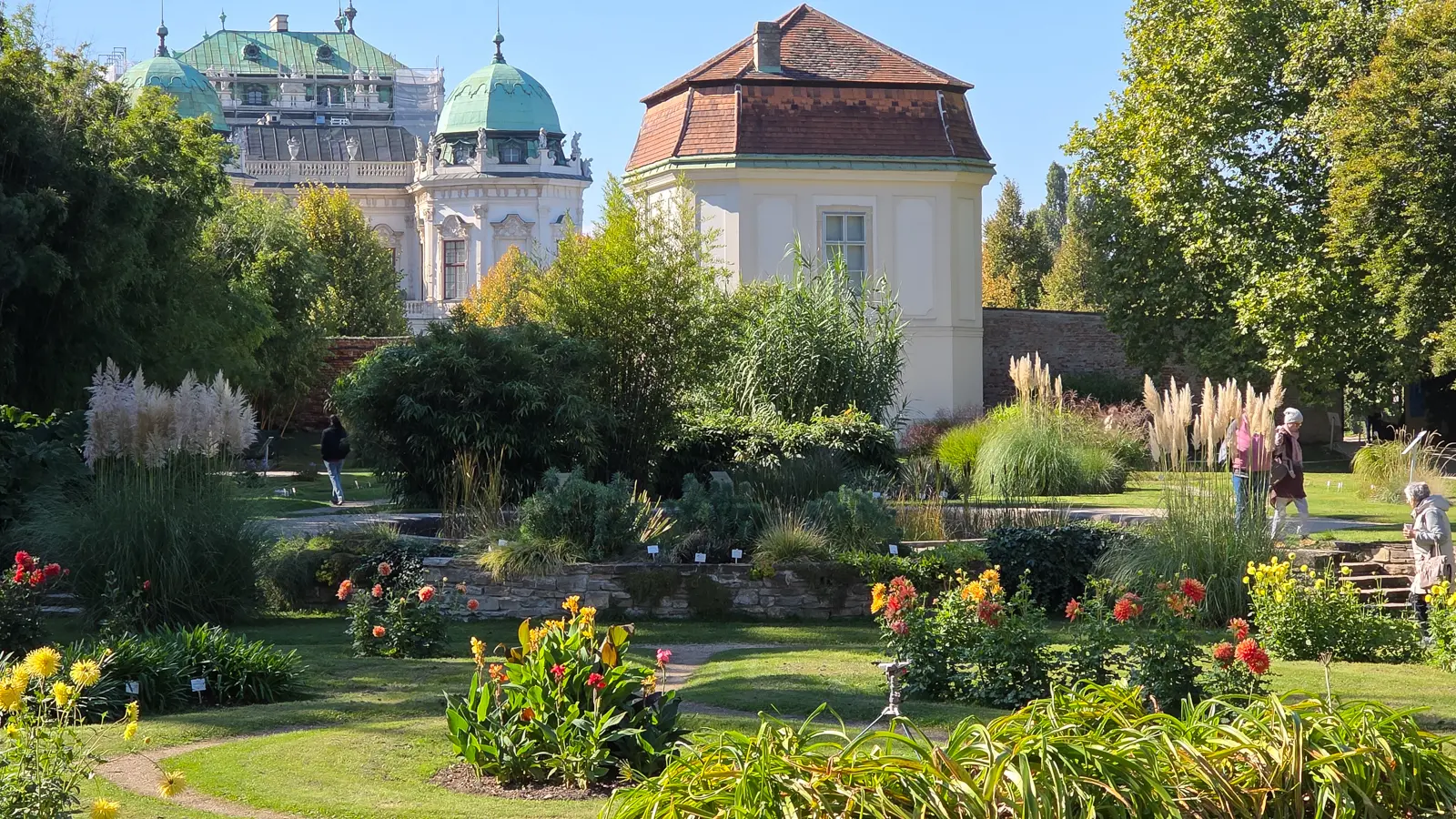
The Upper Belvedere and Klimt’s Masterpiece
At the top of the gardens stands the Upper Belvedere, a palace that now houses one of Austria’s most important art collections, set within rooms that are themselves richly decorated with Baroque elegance. Inside, visitors encounter works spanning centuries, offering a comprehensive journey through Austrian art, from the Middle Ages to modern movements. Among these, one masterpiece draws particular attention: The Kiss by Gustav Klimt, displayed as a highlight of the museum’s renowned collection of Viennese Secession works.
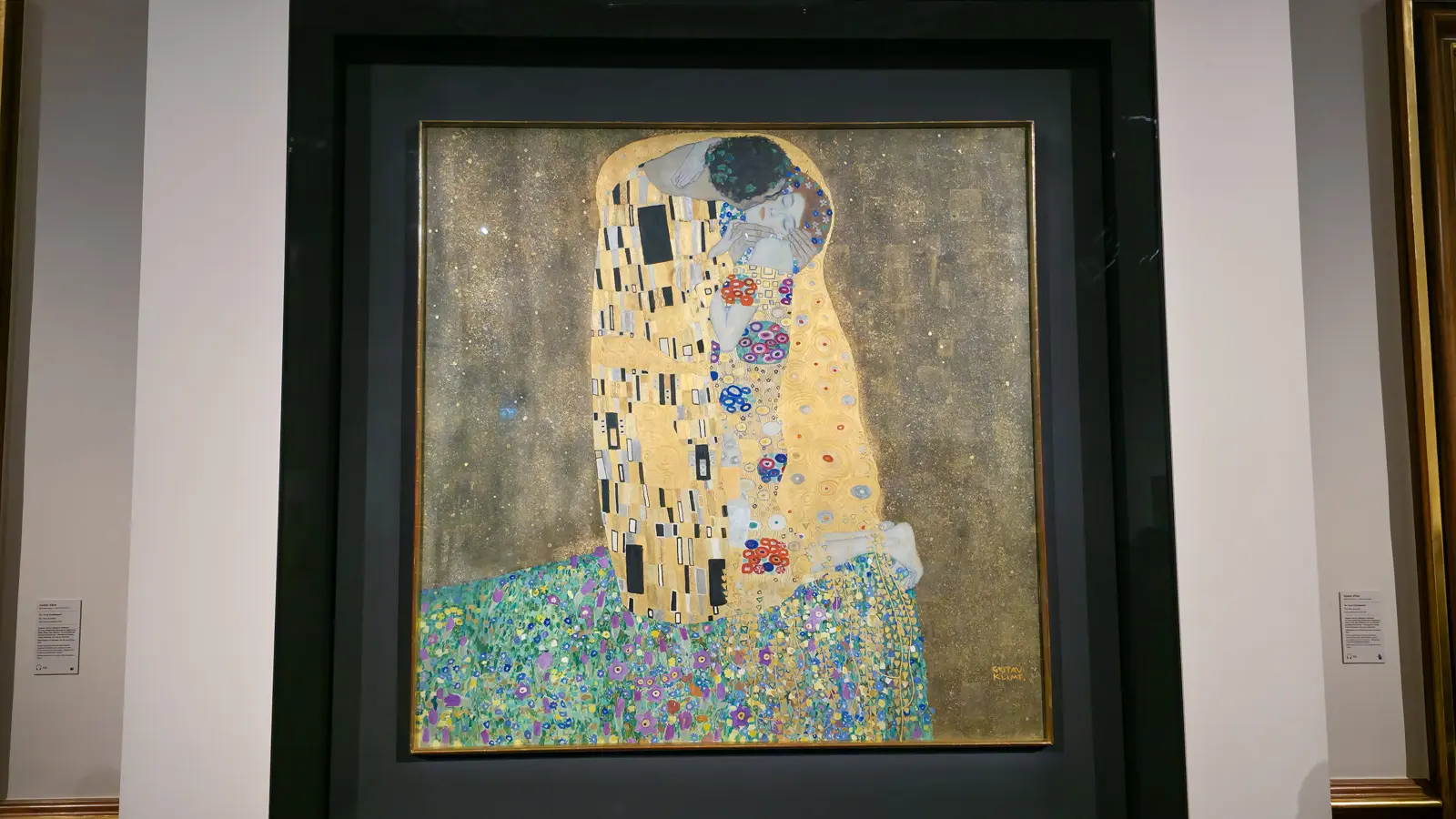
Seeing The Kiss in person is a profoundly different experience from viewing it in reproductions. The luminous gold leaf, the intricate patterns, and the tenderness of the figures create a moment that feels both intimate and iconic, inviting you to pause and take in every detail. Yet Klimt’s presence extends beyond a single painting; the Upper Belvedere also showcases other important works from his career and from artists associated with the Vienna Secession, placing his masterpiece within a broader artistic movement that reshaped Vienna at the turn of the twentieth century.
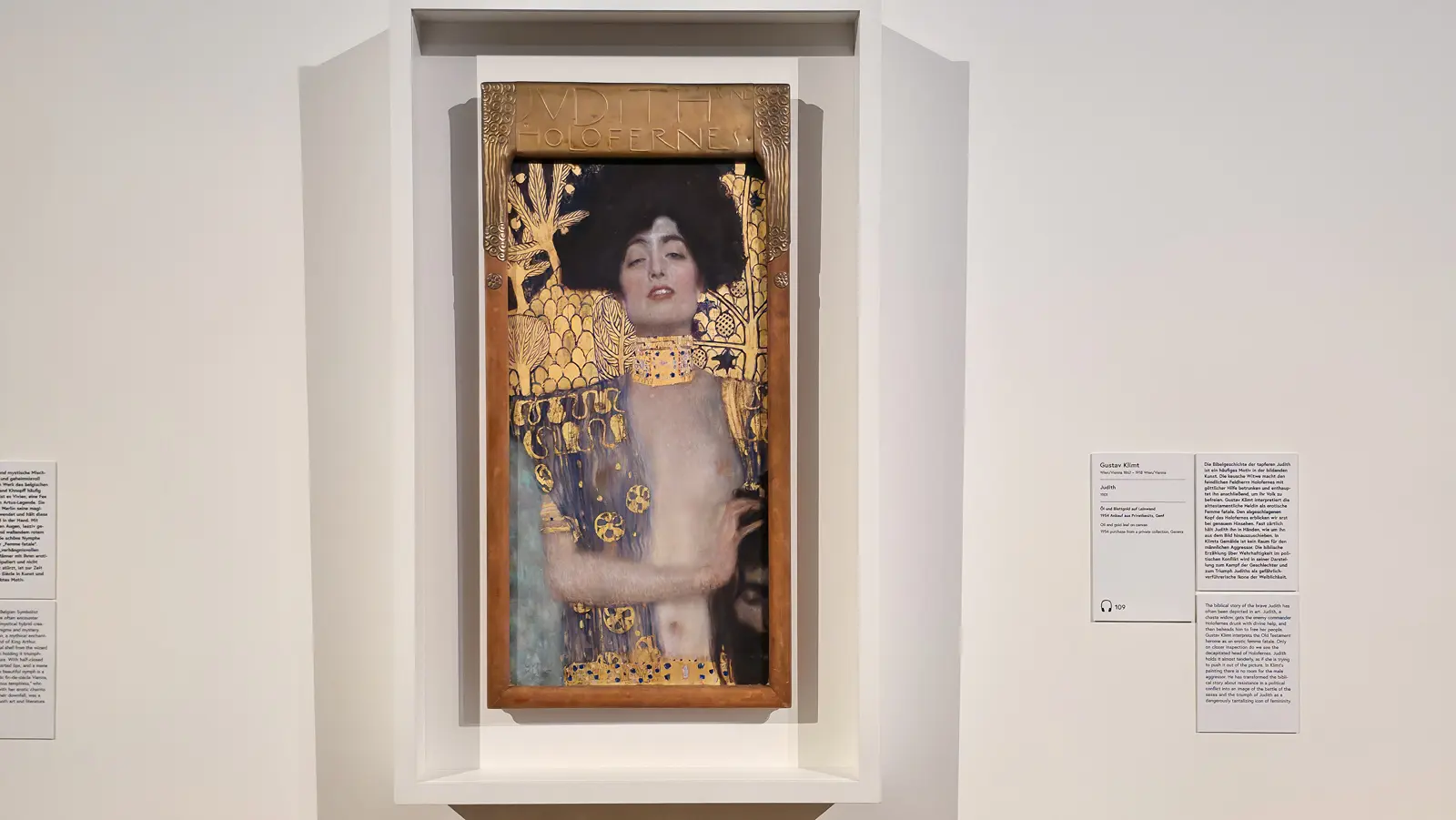
Beyond Klimt, the Upper Belvedere offers a rich and layered exploration of Austrian art. Visitors move through galleries featuring medieval religious works, Baroque paintings, and key pieces from the nineteenth and twentieth centuries, including artists such as Egon Schiele and Oskar Kokoschka. This progression creates a deeper understanding of how Austrian art evolved over time, making the experience not only visually captivating but also intellectually engaging. The result is a visit that appeals equally to art lovers, history enthusiasts, and those drawn by the beauty of the palace itself.
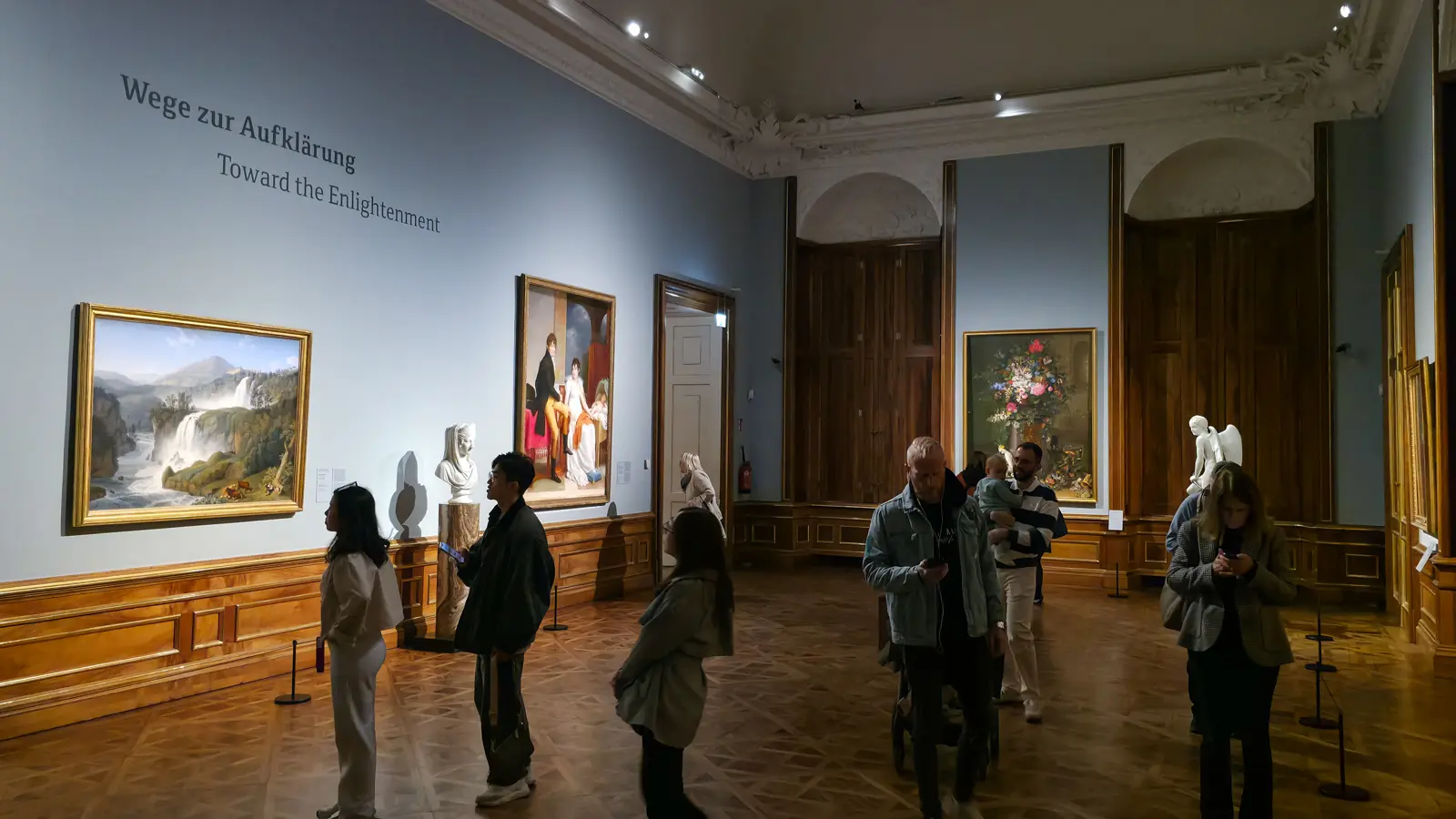
The Lower Belvedere: Intimacy and Refinement
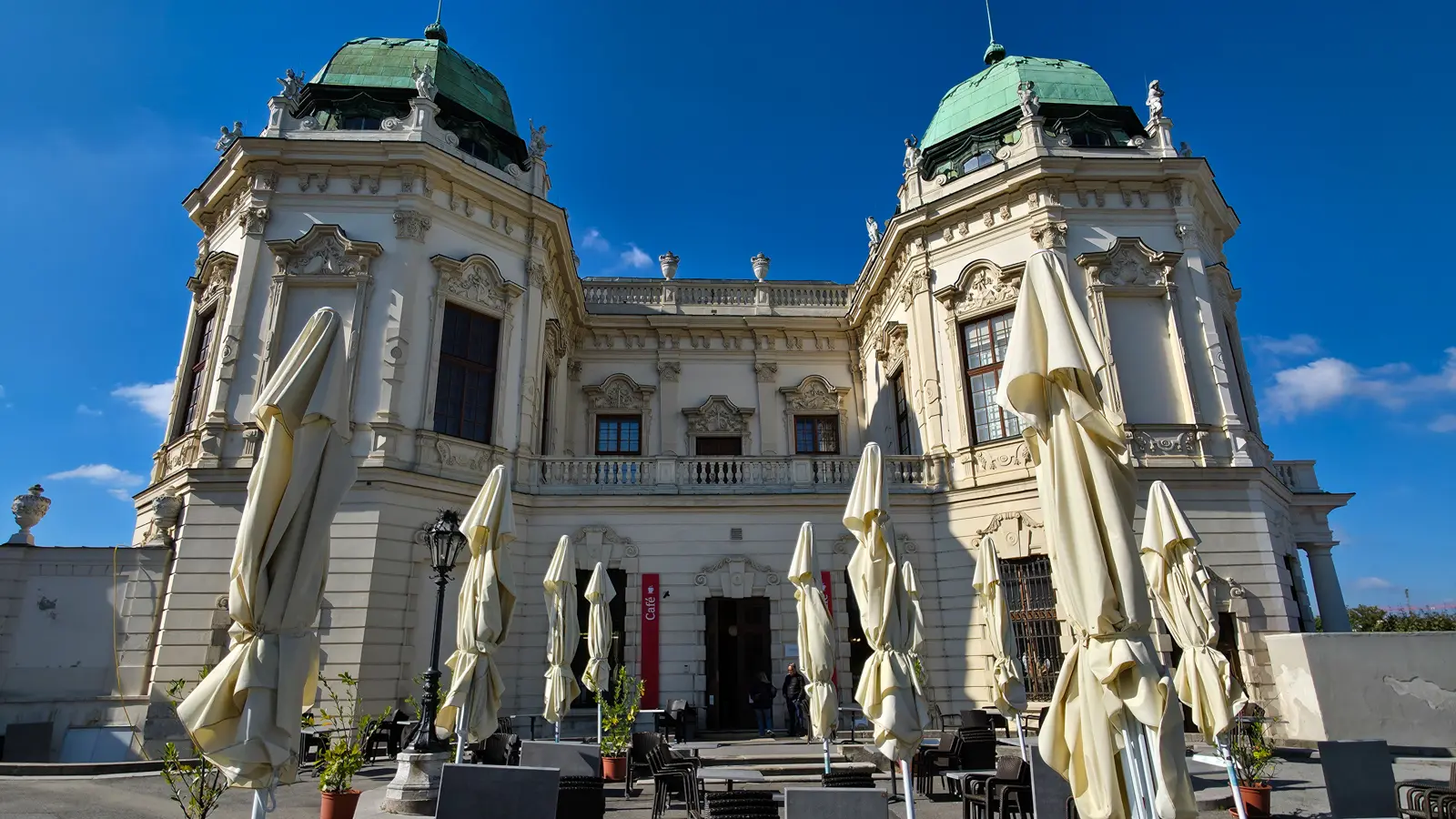
While the Upper Belvedere impresses with its scale and celebrated collections, the Lower Belvedere offers a more intimate and personal glimpse into the life of Prince Eugene of Savoy. From the outside, the palace presents a more restrained and elegant façade, set lower within the landscape and partially embraced by its surrounding gardens, creating a sense of quiet sophistication rather than grandeur. This more subtle architectural presence reflects its original purpose as a private residence, designed for comfort, reflection, and refined living.
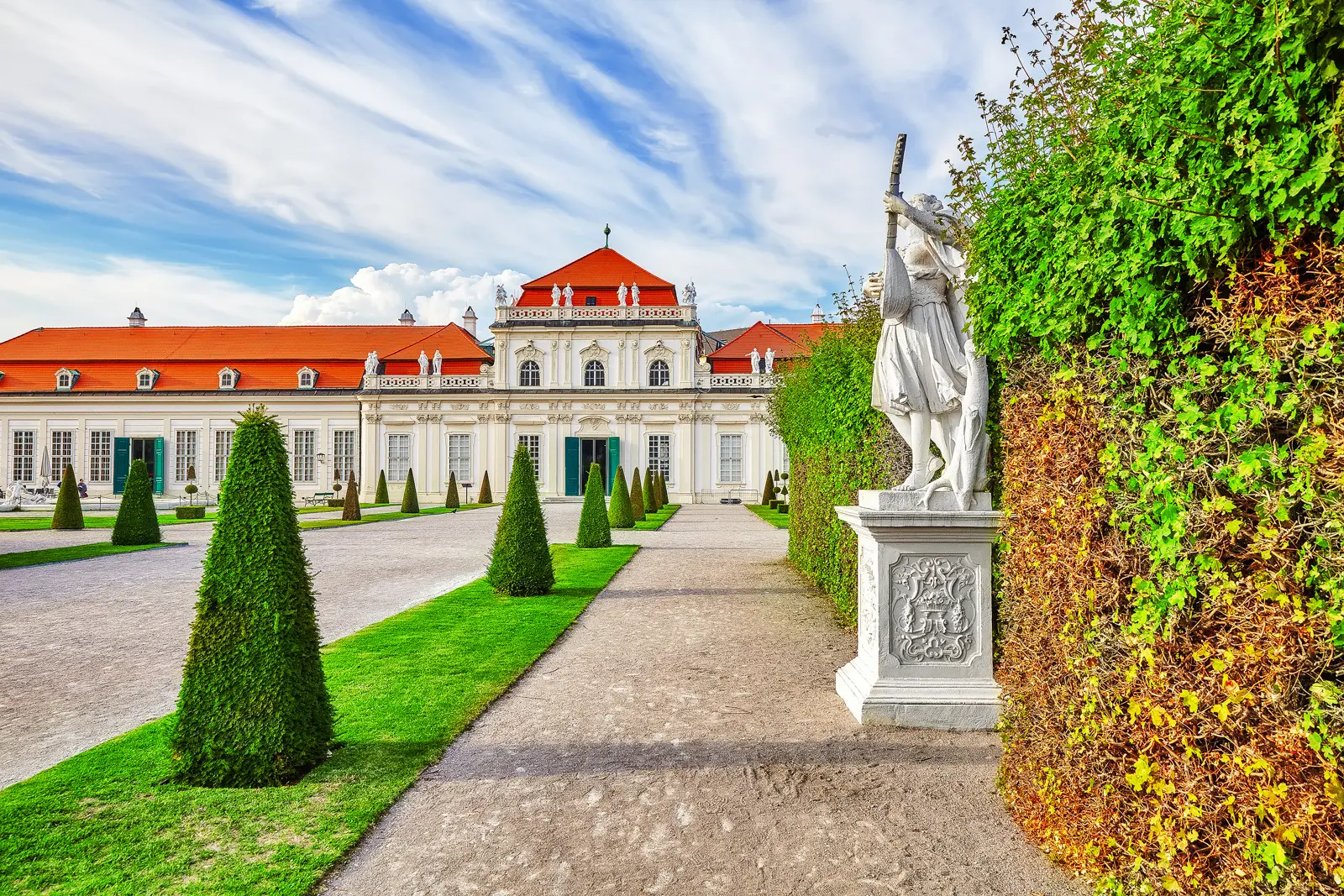
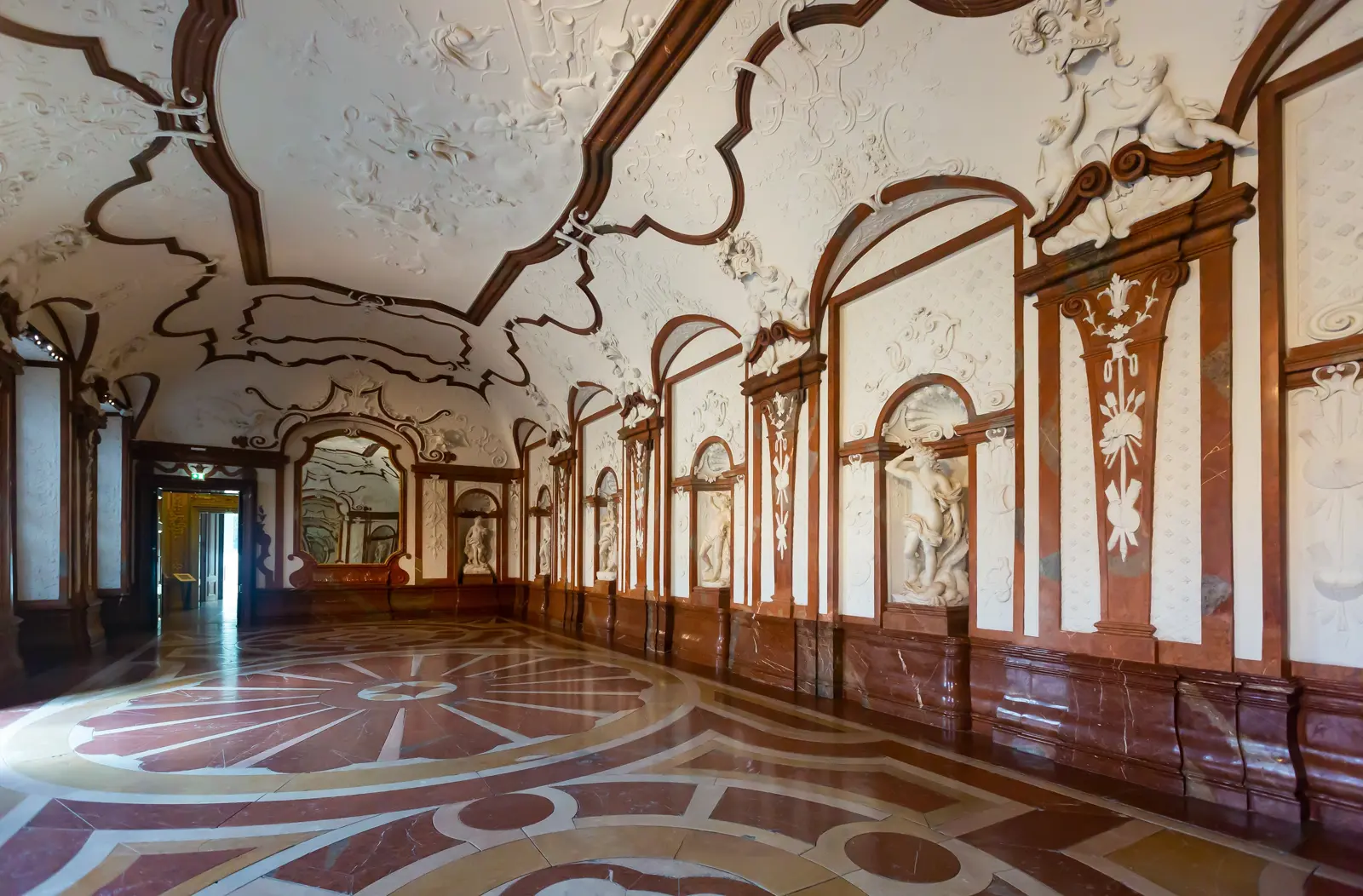
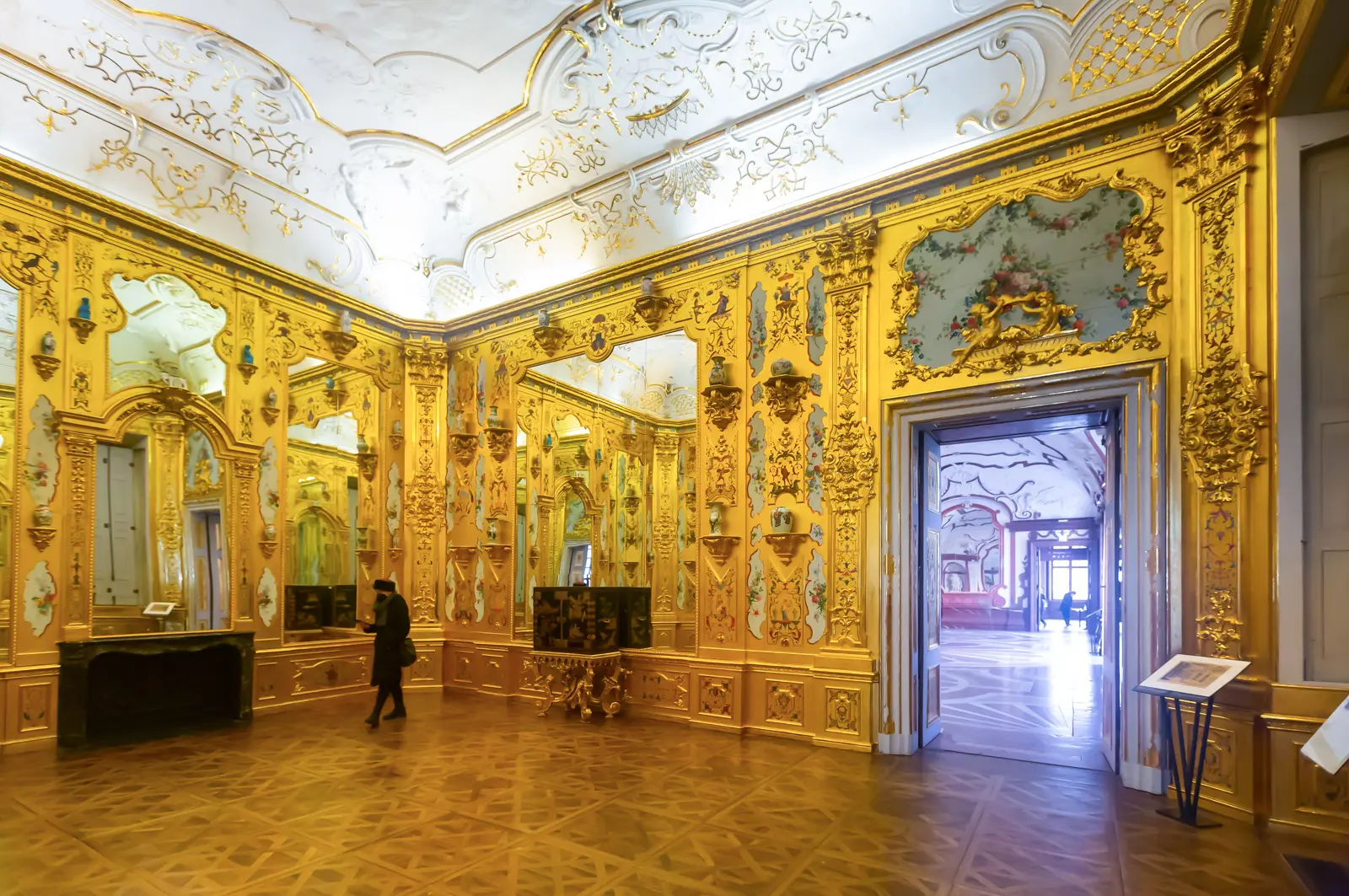
Inside, the atmosphere shifts to one of richly detailed intimacy. The rooms are beautifully decorated, revealing the tastes and lifestyle of Prince Eugene through ornate stucco work, frescoed ceilings, and carefully designed spaces. Among the highlights is the impressive Marble Hall (Marmorsaal), where classical proportions and decorative elements come together in a harmonious display of Baroque artistry. Equally captivating is the Golden Cabinet, a more intimate space adorned with intricate gilded details that reflect the refined craftsmanship of the period. Walking through these interiors, you gain a deeper understanding of the palace not just as a monument, but as a lived and curated space, where elegance was expressed through both architecture and decoration.
The contrast between the Lower and Upper Belvedere adds another layer to the overall experience, revealing how grandeur and intimacy coexist within the same complex. Together, they offer a more complete portrait of life at the Belvedere – one that moves seamlessly between public display and private refinement.
Architecture and Design: Baroque Elegance at Its Finest
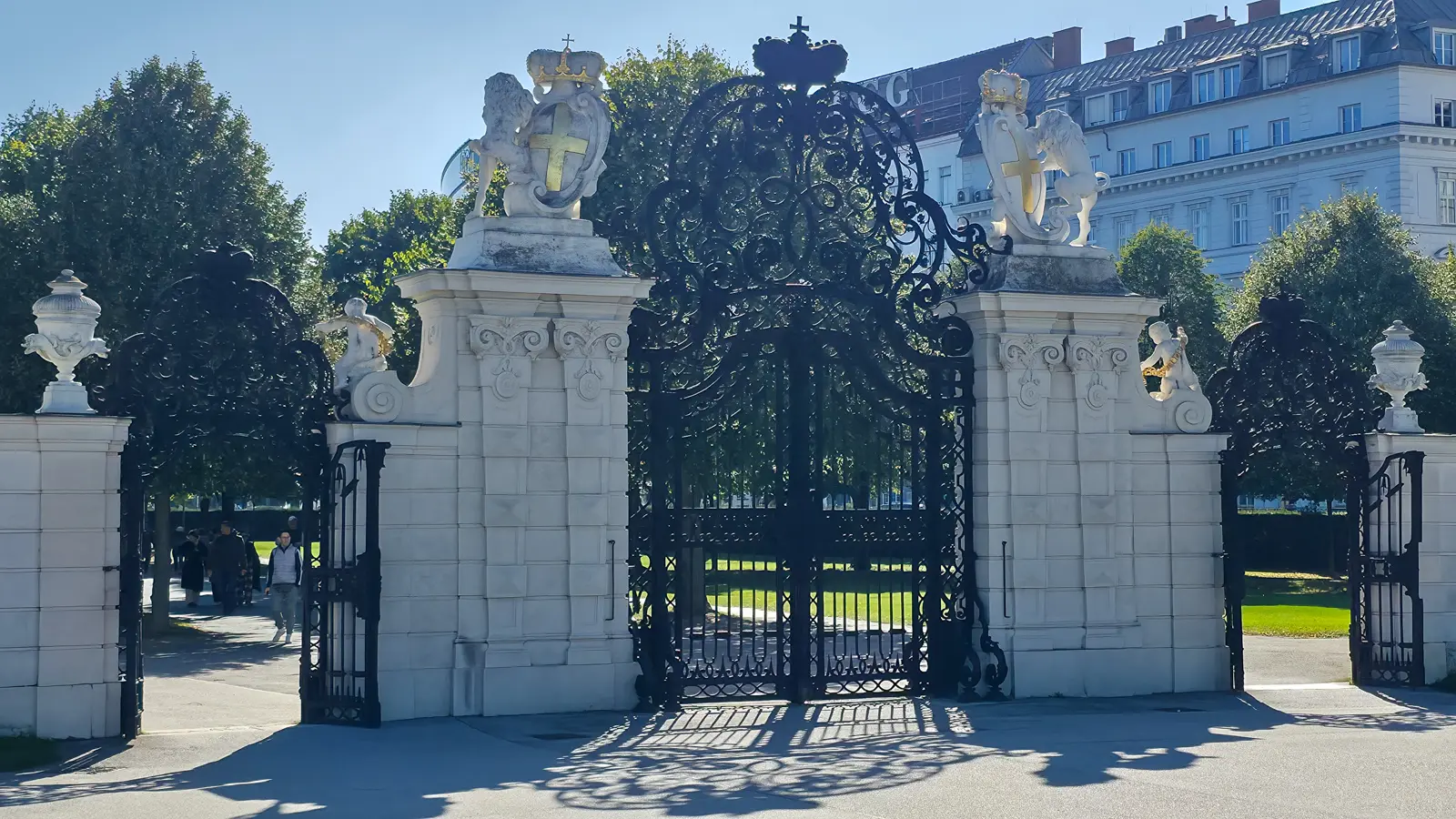
The Belvedere is a masterpiece of Baroque architecture, where every detail contributes to a carefully orchestrated sense of movement, drama, and harmony. From the moment you approach the complex, the elegance is unmistakable. The façades of both the Upper and Lower Belvedere are richly articulated with sculptural ornamentation, pilasters, and decorative elements that create rhythm and visual interest without overwhelming the overall balance. The experience begins even before entering the grounds, as ornate gates open onto the gardens, framing the first view of the palaces and reinforcing the sense that you are stepping into a carefully designed world of prestige and refinement.
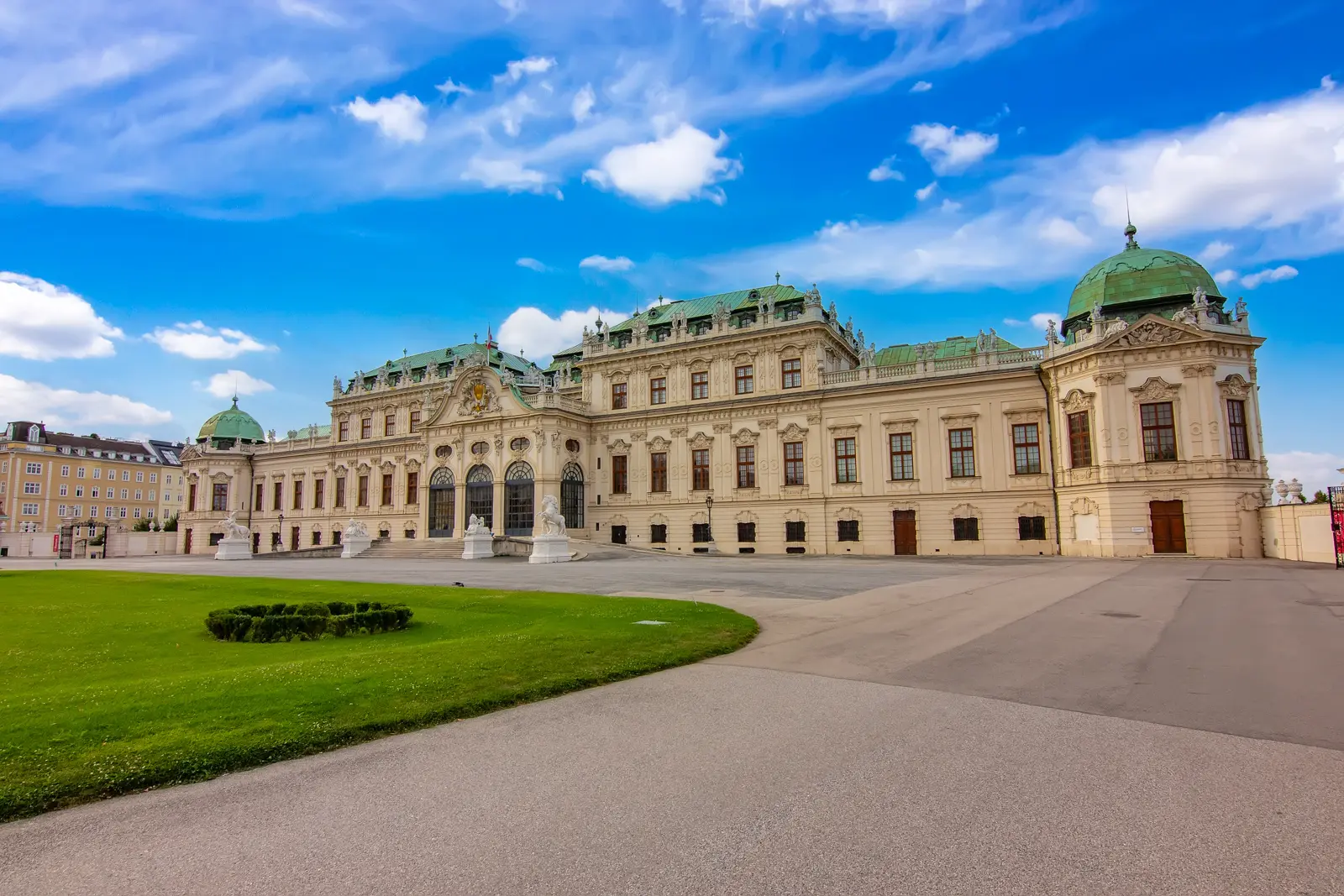
As you move closer, the architectural composition reveals itself in layers. The Baroque emphasis on perspective and axial alignment is evident in every direction – long sightlines, symmetrical layouts, and carefully framed views guide your movement through the space. The relationship between the buildings and the gardens is particularly striking. Rather than standing apart, the architecture and landscape are seamlessly integrated, creating a unified composition that feels both grand and fluid. Terraces, sculptures, and pathways extend the architectural language outward, transforming the entire estate into a living work of art.
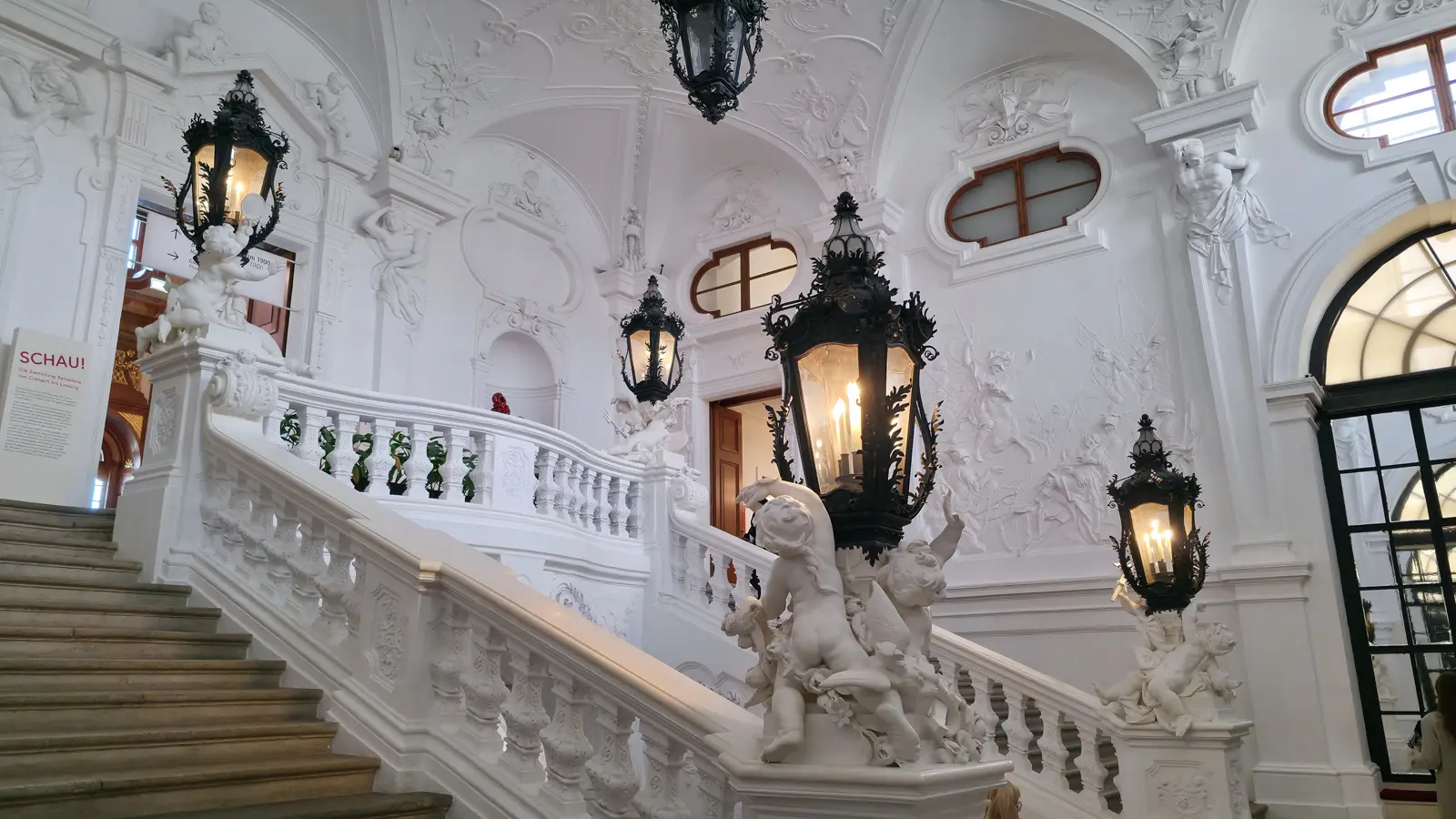
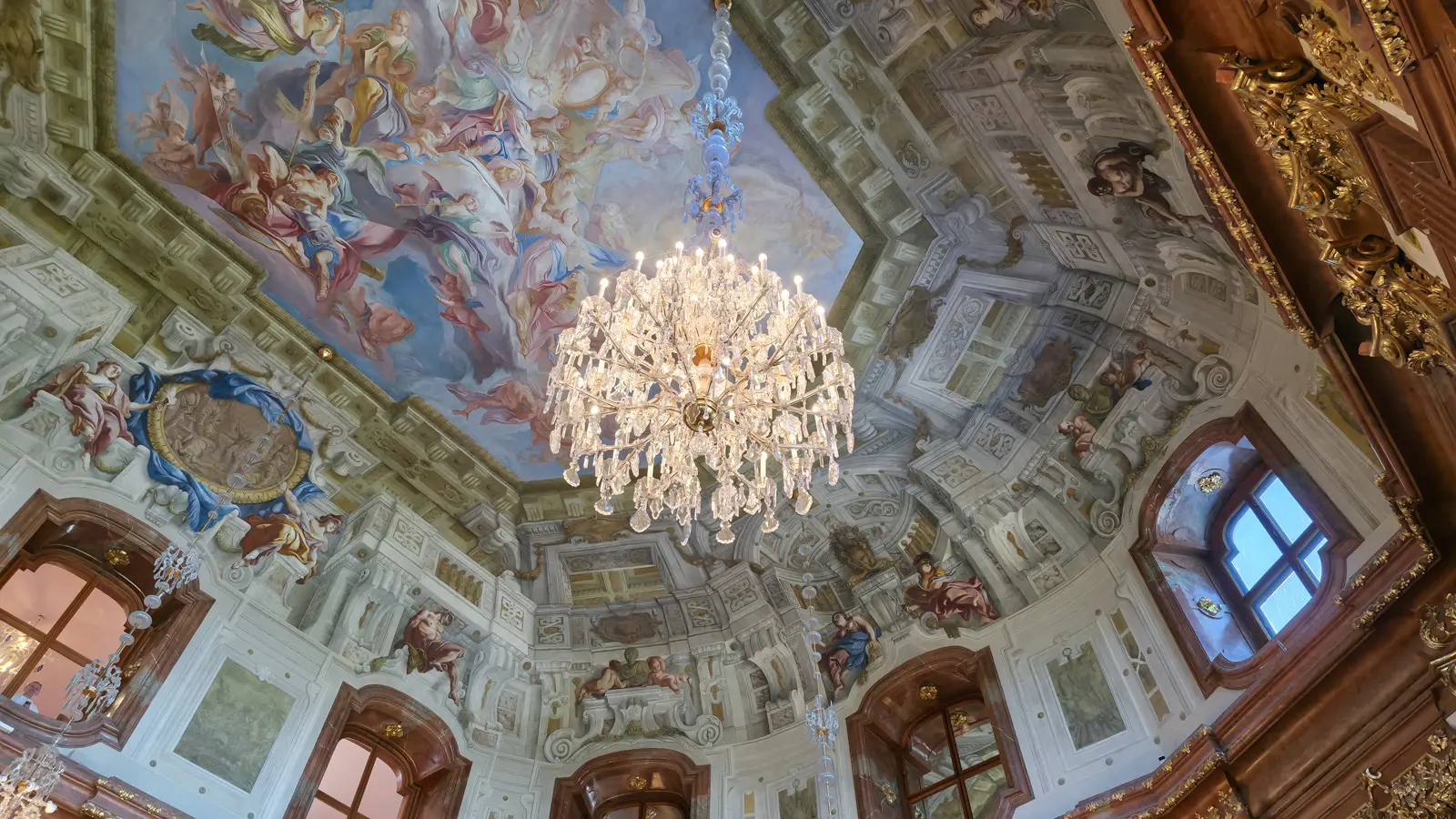
Inside, the Belvedere continues to impress with interiors that reflect both opulence and artistic mastery. The grand staircases set the tone, designed not merely as functional elements but as ceremonial spaces that elevate the experience of moving through the palace. The Marble Hall stands as one of the most breathtaking interiors, where light, proportion, and decorative richness come together in perfect harmony. Its painted ceiling adds another dimension, drawing the eye upward and reinforcing the Baroque fascination with illusion and grandeur. Throughout the palace, rooms unfold in a sequence that feels both intentional and immersive, revealing a world where architecture, art, and lived experience are inseparable.
The Experience: A Place to Wander and Reflect
What makes the Belvedere truly special is not just its history or its art, but the way it makes you feel as you move through it. Walking through the terraced gardens, with their sculpted hedges, fountains, and carefully aligned pathways, creates a natural rhythm that gently guides you from one perspective to another. As you move between the Lower and Upper Belvedere, the changing views – from intimate garden corners to sweeping panoramas over Vienna – invite you to pause, take it all in, and simply be present in the moment. Inside, the experience shifts again, from grand ceremonial spaces to quiet gallery rooms filled with art, offering a balance between awe and introspection. It is a place that encourages you to slow down, to notice the details, and to appreciate the harmony between architecture, landscape, and human experience. Whether you are drawn by the art, the history, or the sheer beauty of the setting, the Belvedere offers an experience that feels both immersive and deeply satisfying.
Bubbly Tips for Visiting the Belvedere
- Best time to visit: Arrive early in the morning or later in the afternoon to enjoy softer light, fewer crowds, and a more peaceful experience, especially in the gardens between the Upper and Lower Belvedere.
- Tickets & entrance fees: Access to the Belvedere Gardens is free, making it one of the most beautiful open spaces in Vienna. However, entry to the Upper Belvedere and Lower Belvedere requires a ticket, particularly if you plan to see The Kiss by Gustav Klimt. Booking online in advance is highly recommended.
- Explore both palaces: While the Upper Belvedere is home to world-famous artworks, don’t miss the Lower Belvedere for its intimate Baroque interiors, including the Marble Hall and the Golden Cabinet.
- Take your time in the gardens: The walk along the terraced Baroque gardens, with fountains, sculptures, and panoramic views, is an essential part of the Belvedere experience – not just a transition between buildings.
- Take a café break with a view: The Upper Belvedere also features a beautiful café where you can pause, relax, and soak in the elegant surroundings – the perfect moment to reflect after exploring the galleries.
- Wear comfortable shoes: The Belvedere complex is larger than it appears, with multiple levels, pathways, and interior spaces to explore.
- Best seasons to visit: The gardens transform throughout the year – from blooming flowers in spring and lush greenery in summer to golden tones in autumn and a magical, quieter atmosphere in winter.
- Location: The Belvedere Palace is located just southeast of Vienna’s historic center, easily accessible by tram, train, or a pleasant walk from the city center.
Final Thoughts
In a city filled with extraordinary landmarks, the Belvedere stands out not only for its beauty, but for the way it brings together so many elements of Vienna’s identity. It is at once imperial and personal, artistic and natural, structured and open.
More than a palace, it is an experience – one that invites you to wander, to reflect, and to connect with the city in a way that feels both timeless and deeply present.
Have you visited the Belvedere, or is it on your Vienna itinerary? I would love to hear your thoughts!
Until next time,

🌟 Everything You Need to Plan Your Dream Trip in 2026
- 🌟 Luxury Hotels - Find premium stays with Booking.com & Hotels.com
- 🏡 Vacation Rentals - Discover unique properties on VRBO
- 🏞️ Guided Tours - Explore with Viator or GetYourGuide
- 🎫 Attraction Tickets - Skip the lines with Tiqets
- 🚢 Ocean Cruises - Set sail with Cruise Direct
- 📱 International SIMs - Stay connected with Saily
- 🚗 Car Rentals - Budget-friendly options from Discover Cars
- 🌐 Secure VPNs - Browse safely with NordVPN
- 💶 Currency Exchange - Best rates with Wise
- 🗣️ Learn Languages - Master the local language with Babbel and Rosetta Stone