
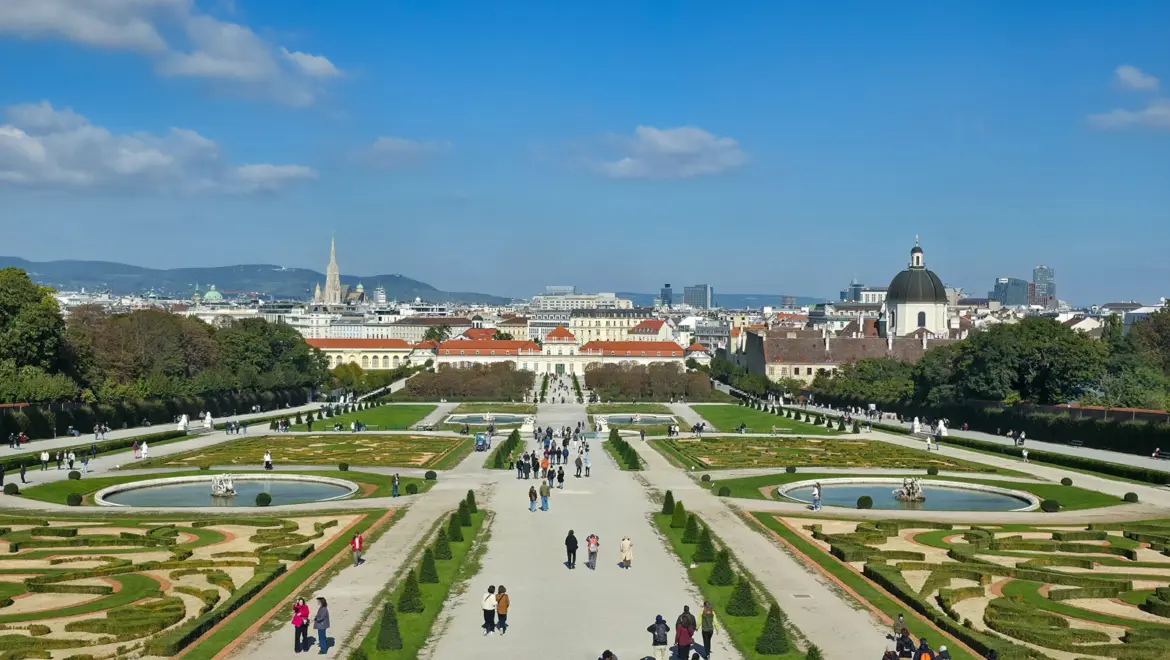
There are places in Vienna that impress you instantly – and then there are places that reveal themselves slowly, layer by layer, with a quiet kind of magic. The Belvedere Palace is often celebrated for its art and architecture, but beyond the palace walls lies something just as captivating: its gardens.
At first glance, the Belvedere Gardens feel like a perfect composition – symmetrical, elegant, almost theatrical. But the more time you spend here, the more you begin to notice something else. The space softens, expands, and transforms. What begins as a formal Baroque landscape gradually gives way to quieter paths, reflective corners, and moments of unexpected calm. It is not just a garden you walk through, it is a place you experience!
Belvedere Gardens at a Glance
🌳 What they are: Baroque terraced gardens connecting the Upper and Lower Belvedere, designed by Dominique Girard (student of Le Nôtre)
🏛️ Three terraces: Formally composed along a central axis — sphinxes, classical statuary, and cascading levels rising from the Lower to the Upper Belvedere
⛲ Fountains: Sculptural Baroque fountains adding water and movement to the otherwise precise geometry
🪞 Reflecting pool: The iconic pool in front of the Upper Belvedere — one of Vienna’s most photographed views
🌿 Informal gardens: Beyond the formal terraces — quieter green spaces with landscaped paths, planted gardens, and open lawns
🆓 Entry: Free and open to the public — one of Vienna’s most beautiful and accessible green spaces
📍 Location: Prinz Eugen-Straße 27, 1030 Vienna — easily reached by tram or on foot from the center
💡 Tip: Walk from the Lower to the Upper Belvedere — the ascending perspective is how the gardens were designed to be experienced
The Formal Gardens: A Masterpiece of Symmetry
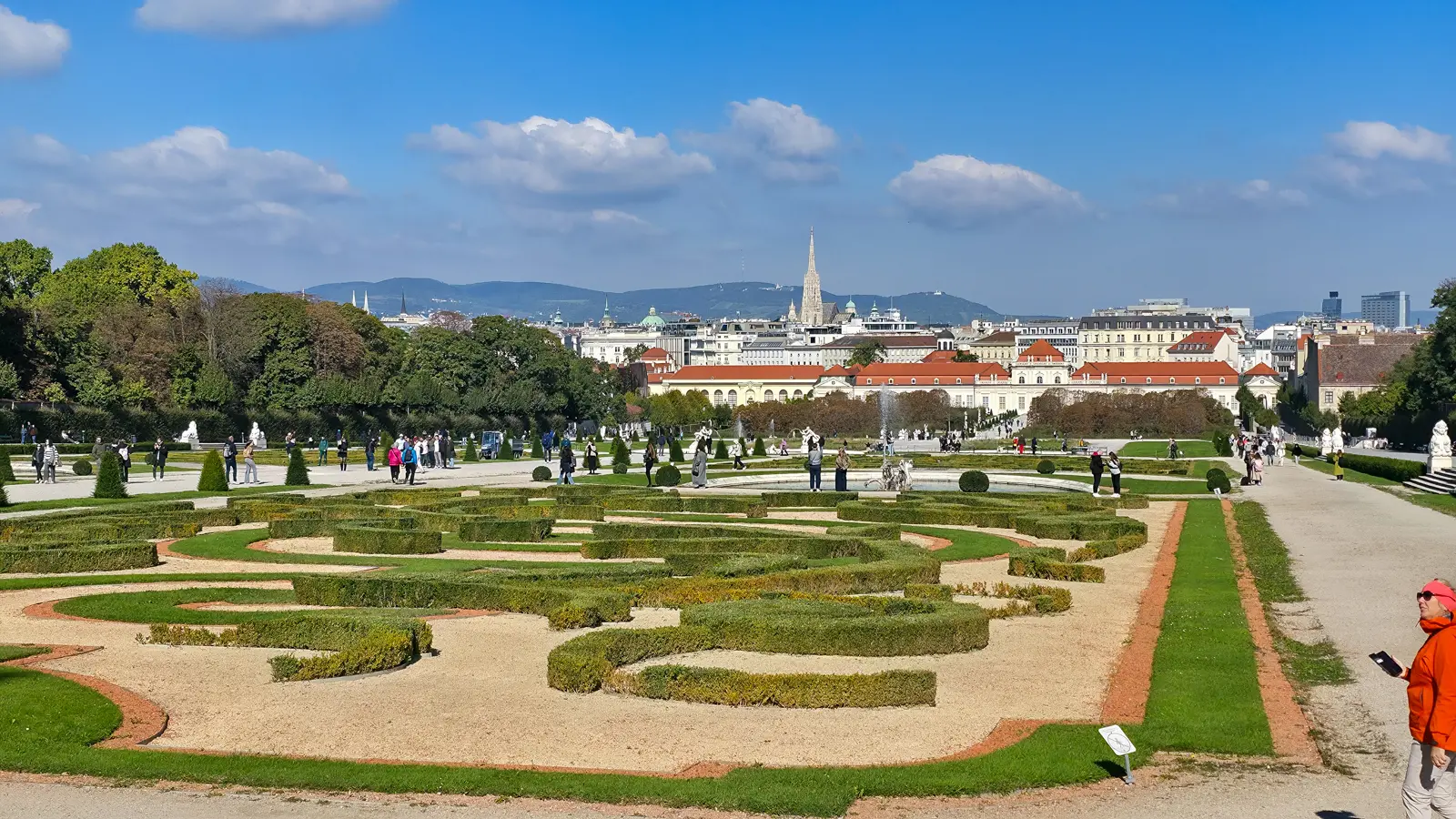
The heart of the Belvedere Gardens lies in the formal Baroque landscape that stretches between the Upper and Lower Belvedere. Designed by Dominique Girard – a student of André Le Nôtre, the celebrated landscape architect of Versailles – the gardens follow a strict geometric layout, where every pathway, hedge, and terrace is aligned along a central axis with carefully planned symmetry and precision.
The garden unfolds across three large terraces, each rising above the other as you walk from the Lower to the Upper Belvedere. Along the way, the sculptural program reveals itself gradually, with sphinxes -symbols of strength and intelligence – presiding over the upper levels, graceful classical figures adorning the lower terrace, and statues representing the twelve months of the year lining the grand staircase between the lower and middle sections like a quiet calendar in stone. At the heart of the composition, fountains and sculptural groups bring movement and theatricality to the gardens, their flowing water and expressive forms adding drama, elegance, and a sense of life to the otherwise precise geometry of the Baroque landscape.
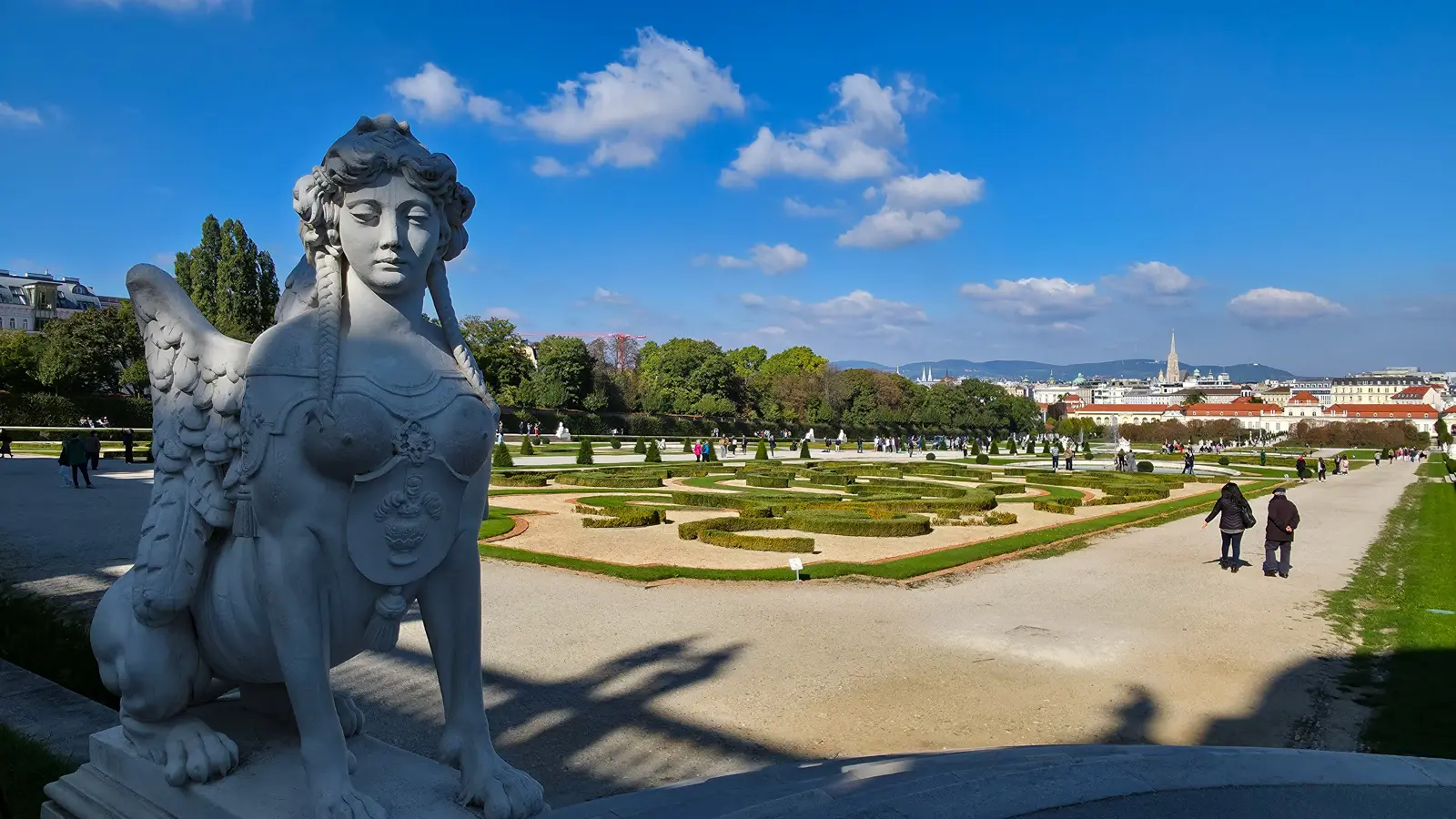
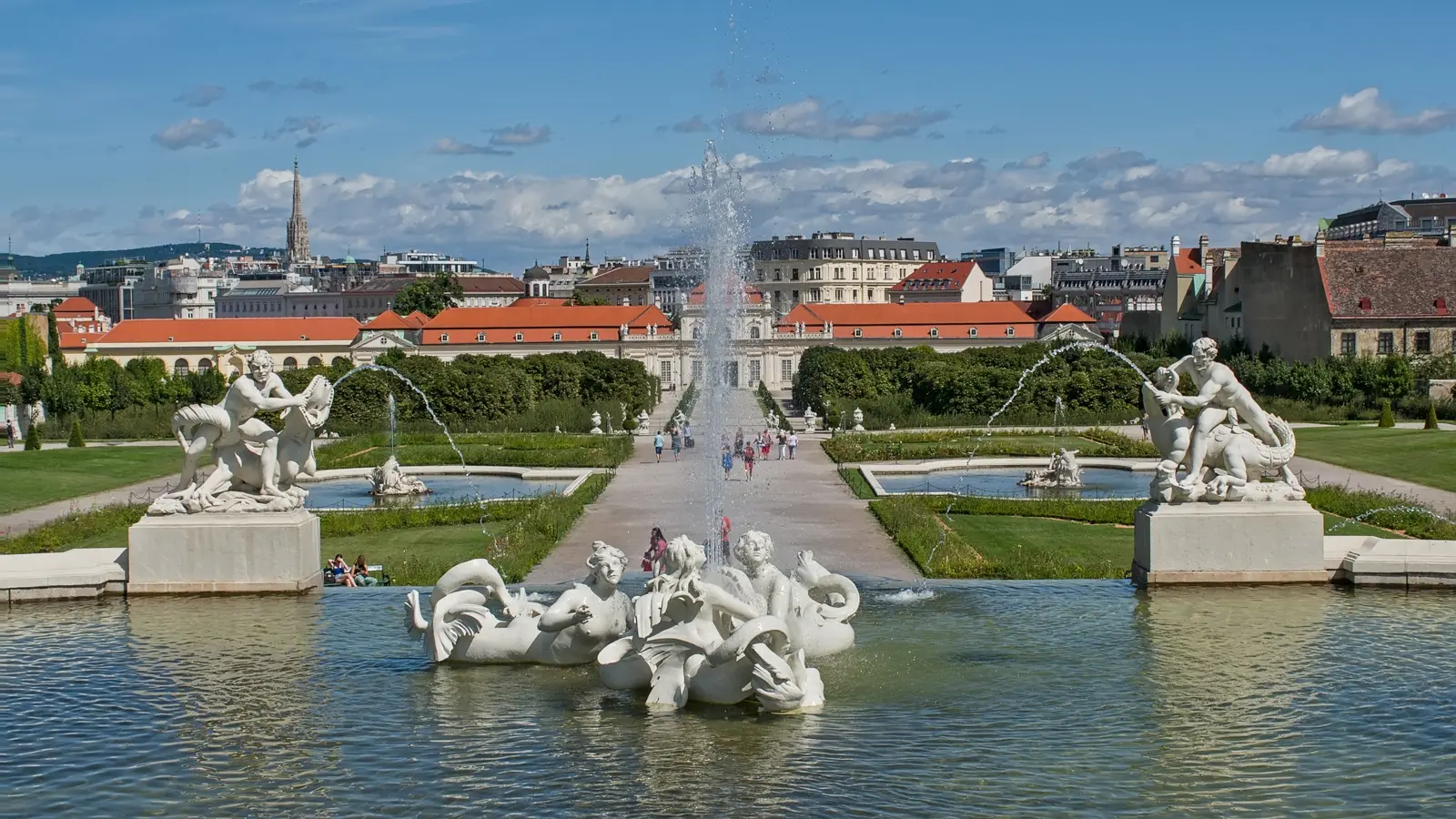
This is where the Belvedere feels most grand, most composed. And yet, even within this structure, there is something deeply calming about the repetition, the balance, and the clarity of design – a space that rewards both a brisk walk and a slow, contemplative stroll.
The Reflecting Pool: Stillness and Perspective
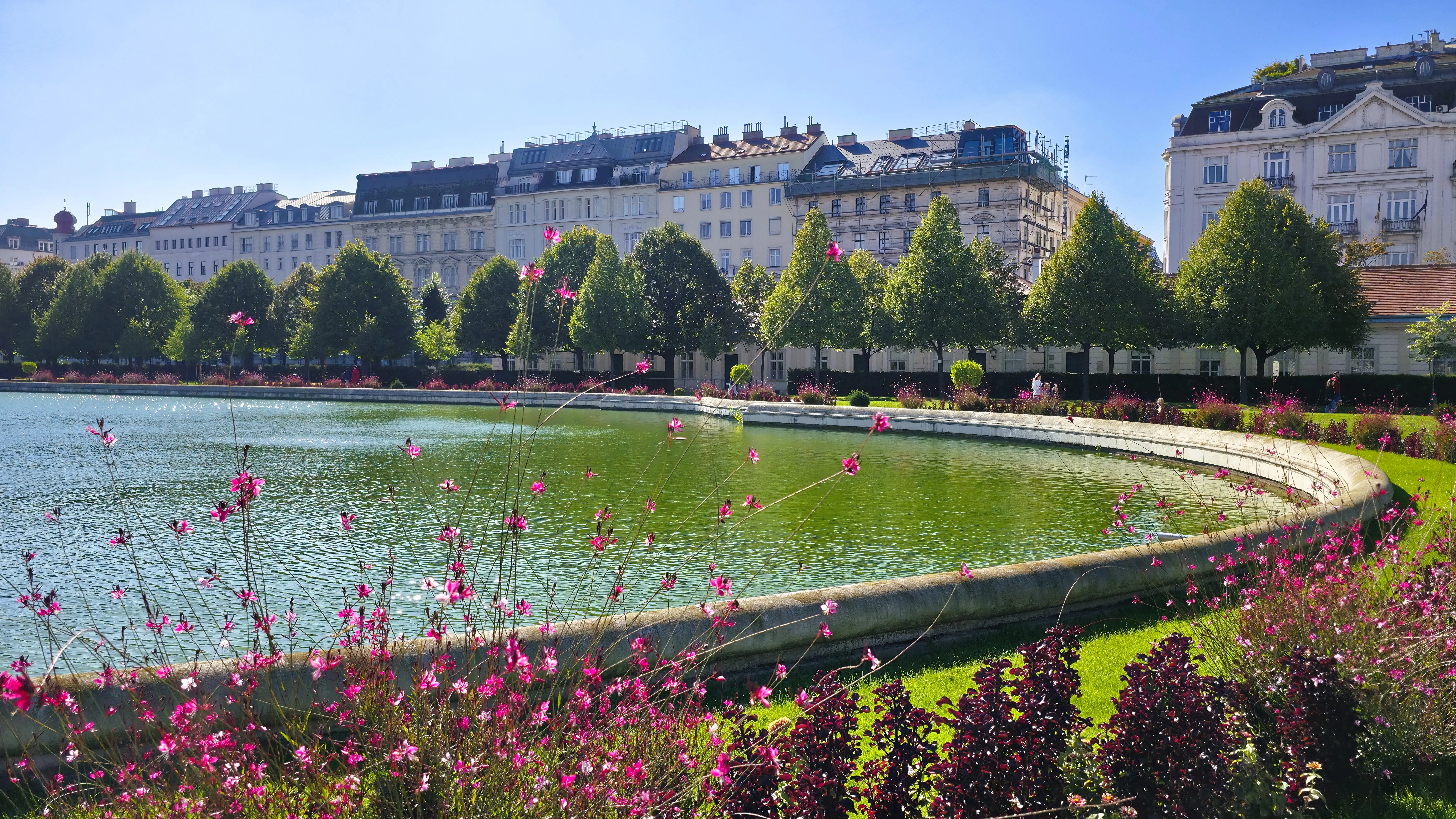
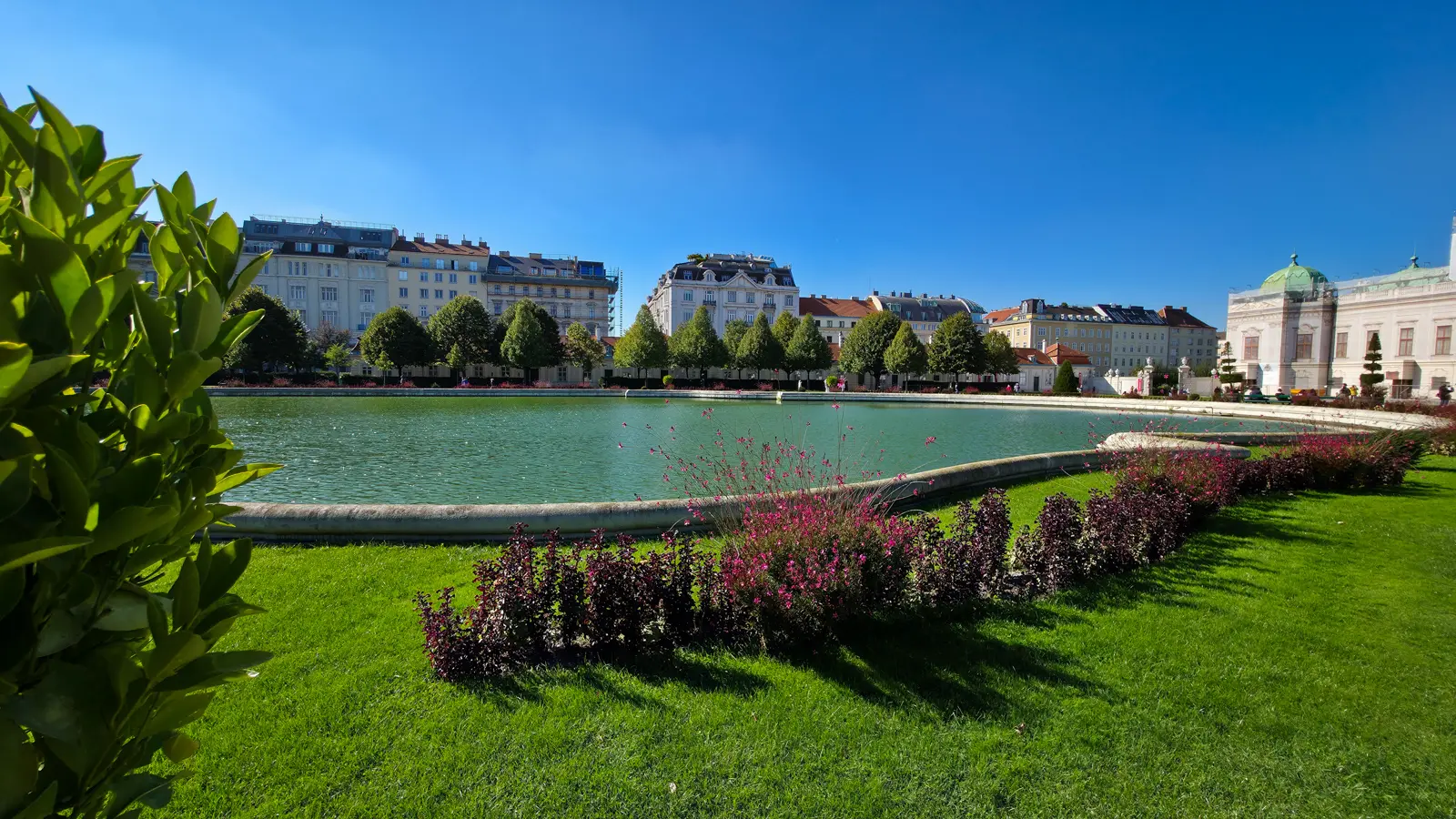
At the top of the gardens, just in front of the Upper Belvedere’s outdoor steps, the atmosphere shifts into something quieter and more contemplative. Here, a large reflecting pool stretches across the south side of the palace, mirroring the monumental façade with striking clarity and creating one of the most elegant visual effects in the entire Belvedere complex. The still water gives the architecture a second life, doubling its presence and softening the grandeur of the Baroque design with a sense of calm, balance, and light.
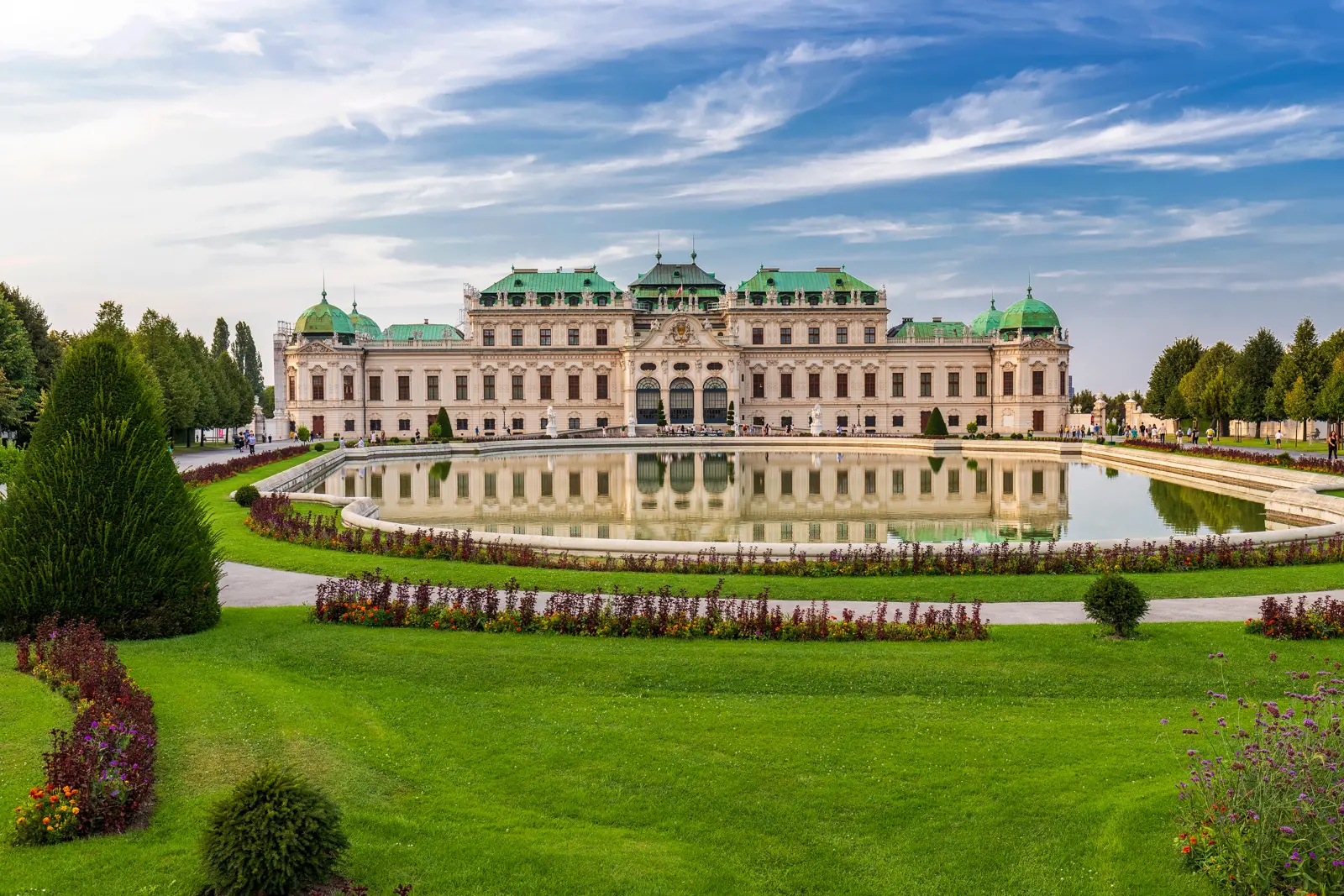
In a garden shaped by terraces, stairways, sculptures, and carefully ordered geometry, this pool feels almost meditative. It invites visitors to slow down – to take photographs, to admire the symmetry, or simply to pause and absorb the refined beauty of the setting. The effect is simple, but it is also deeply theatrical: the palace rises above the water with even greater drama, while the open space around the basin allows the eye to rest and appreciate the harmony of the composition. Compared with the sculptural energy and layered movement found lower in the gardens, the reflecting pool offers a more restrained kind of beauty, one defined by stillness, proportion, and the quiet power of reflection.
Beyond the Axis: A Softer, Greener Side
Step away from the central axis, and the Belvedere Gardens begin to feel different. The strict geometry that defines the grand terraces and formal Baroque layout gradually gives way to a softer, more relaxed landscape. Here, the mood becomes quieter and more intimate, as if the gardens are exhaling after the drama and precision of the main composition. Tree-lined paths, open lawns, and shaded green spaces create a gentler rhythm, inviting visitors to wander rather than simply admire. The symmetry of the larger design is still present in the background, but it no longer commands every moment in the same way.
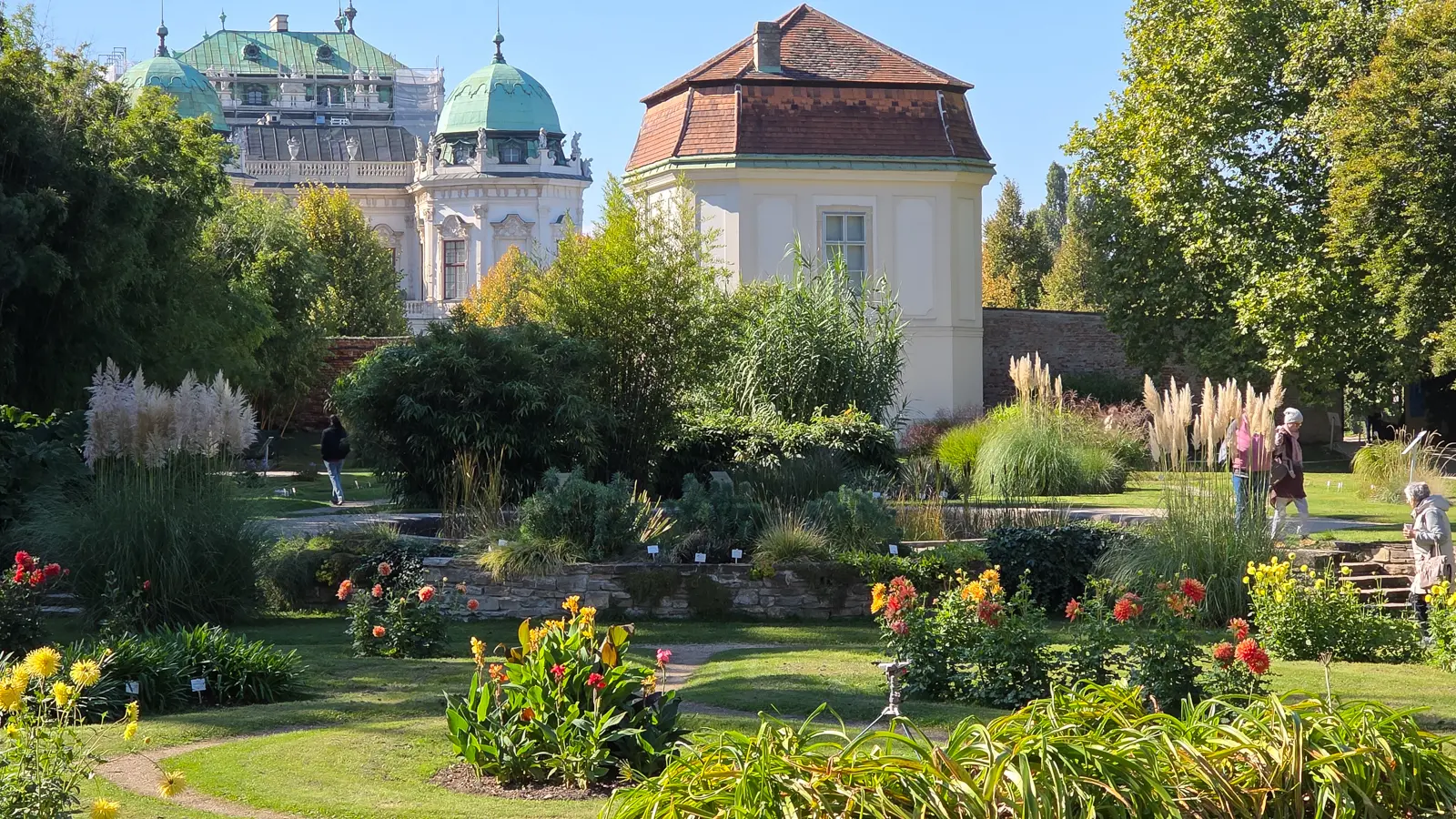
Instead, these outer areas feel more lived in and more human in scale – a place where beauty is experienced through stillness, movement, and everyday presence. People sit on the grass, rest in the shade, stroll at an unhurried pace, or pause to take in the palace and gardens from a different perspective. It is this contrast that makes the Belvedere so compelling: the grandeur of Baroque design remains, but it is softened here by greenery, openness, and a sense of calm. In these quieter corners, the gardens feel less like a formal statement and more like a place to breathe, linger, and simply enjoy being in Vienna.
Hidden Corners and the Art of Slowing Down
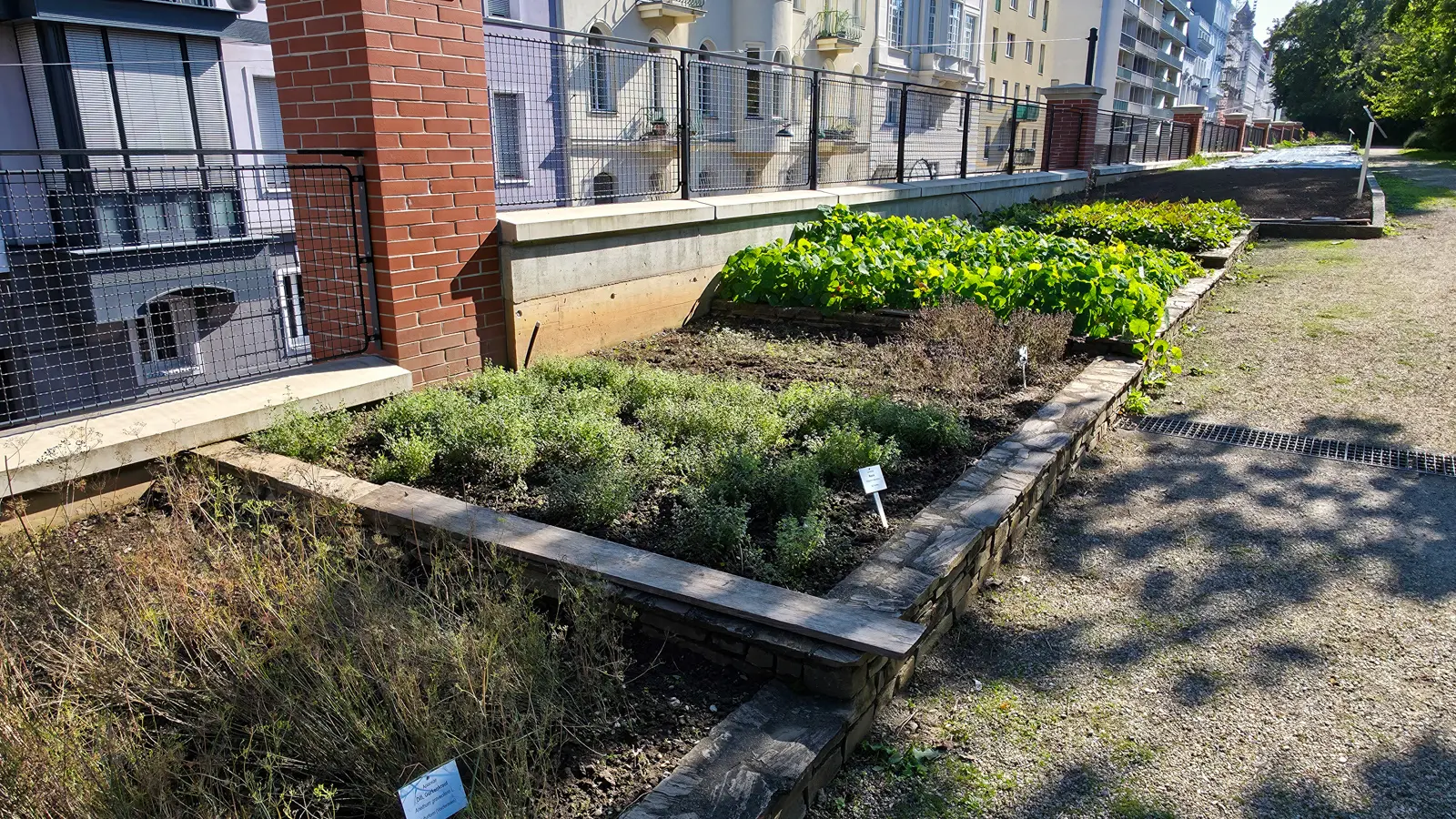
If the broader landscape invites you to wander more freely, it is in the smaller, tucked-away corners that the Belvedere becomes truly personal. Along quieter paths and at the edges of the grounds, subtle details begin to emerge – patches of planted greenery, textured borders, and pockets of shade that feel almost incidental, yet thoughtfully integrated into the space. These are not the grand, composed views of the terraces, but something gentler: moments that reward curiosity and a slower pace.
Here, the experience shifts from observing the gardens to simply being within them. You notice the way light moves across the grass, the quiet rhythm of footsteps along the paths, the contrast between structured design and these softer, more organic edges. These corners are easy to miss, but they are part of what makes the Belvedere feel alive rather than purely monumental. They offer a different kind of beauty – one rooted not in symmetry or scale, but in stillness, presence, and the quiet pleasure of lingering a little longer than planned.
Bubbly Tips for Visiting the Belvedere Gardens
- Best time to visit: Early morning or late afternoon offers softer light, fewer crowds, and a more peaceful atmosphere.
- Free access: The Belvedere Gardens are open to the public and free to explore, making them one of Vienna’s most beautiful and accessible spaces.
- Take your time: The walk between the Upper and Lower Belvedere is part of the experience – don’t rush it.
- Explore beyond the main axis: Step off the central path to discover quieter, more intimate areas.
- Combine with the palace: Pair your garden visit with the Upper Belvedere to see The Kiss by Gustav Klimt.
- Wear comfortable shoes: The grounds are larger than they appear and include multiple levels and pathways.
Final Thoughts
The Belvedere Gardens are more than a backdrop to a palace, they are a destination in their own right. A place where design and nature meet, where history and everyday life quietly intertwine.
Whether you come for the views, the atmosphere, or simply a moment of calm, this is one of those places that stays with you. Not because it overwhelms you, but because it invites you to slow down and experience it fully.
Have you wandered through the Belvedere Gardens, or would you add them to your Vienna itinerary? I would love to hear your thoughts.
Happy travels!

🌟 Everything You Need to Plan Your Dream Trip in 2026
- 🌟 Luxury Hotels - Find premium stays with Booking.com & Hotels.com
- 🏡 Vacation Rentals - Discover unique properties on VRBO
- 🏞️ Guided Tours - Explore with Viator or GetYourGuide
- 🎫 Attraction Tickets - Skip the lines with Tiqets
- 🚢 Ocean Cruises - Set sail with Cruise Direct
- 📱 International SIMs - Stay connected with Saily
- 🚗 Car Rentals - Budget-friendly options from Discover Cars
- 🌐 Secure VPNs - Browse safely with NordVPN
- 💶 Currency Exchange - Best rates with Wise
- 🗣️ Learn Languages - Master the local language with Babbel and Rosetta Stone