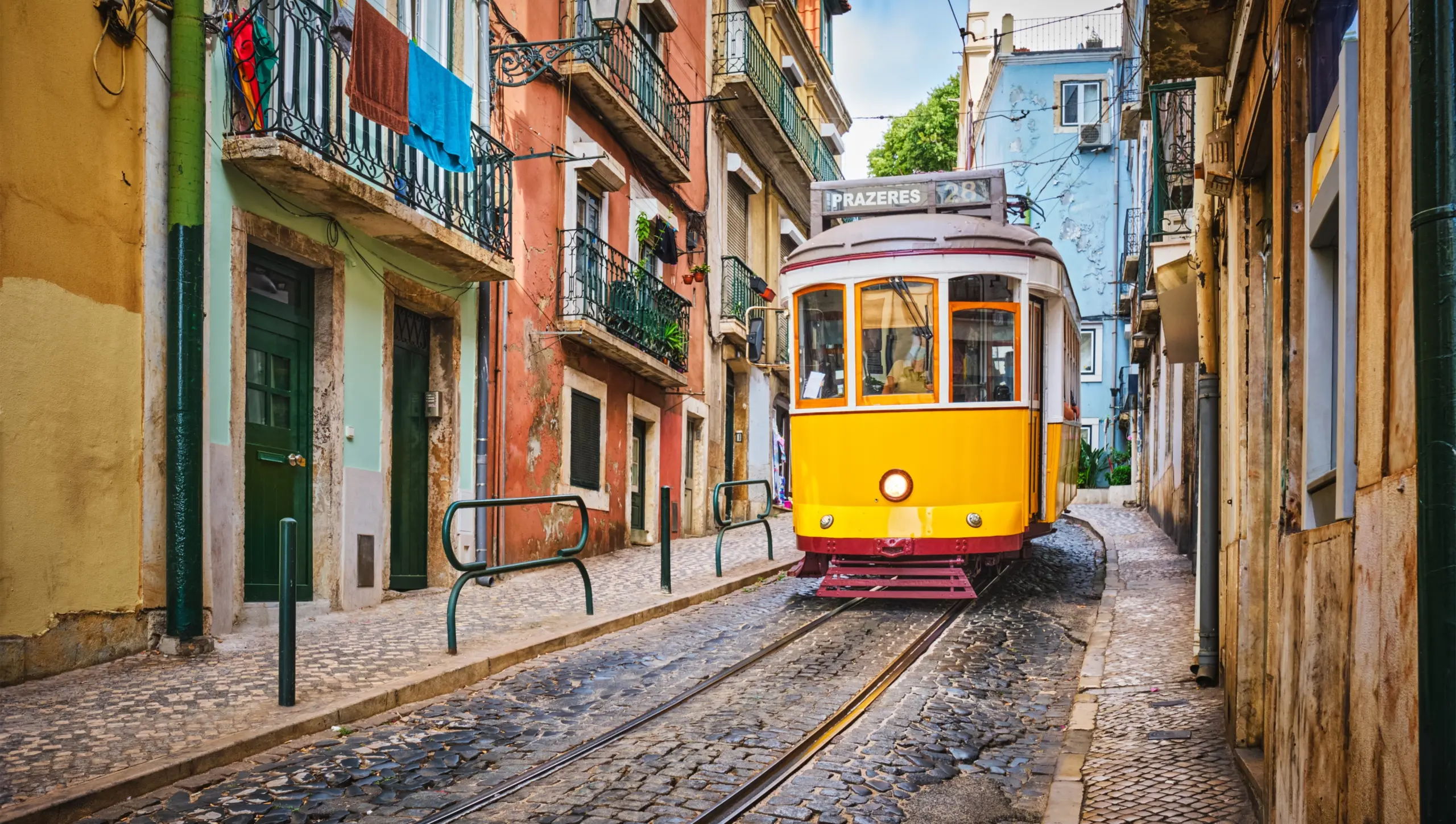
Olá, travelers! If there is one symbol that captures the charm of Lisbon – its golden light, steep hills, tiled façades, and nostalgic soul – it’s the city’s beloved yellow trams. Whether you’re winding through Alfama’s narrow lanes, climbing the hills of Graça, or watching the city glow from a window seat, riding a tram feels like stepping into a moving postcard. I rode several trams during my visit, and each journey felt like a small adventure: the bell ringing, the brakes humming, the sun hitting the rooftops, and the city unfolding like a film. Here is your complete guide to the magic behind Lisbon’s trams: their history, beauty, and why they remain one of the city’s unforgettable experiences.
A Living Piece of Lisbon’s History
Lisbon’s tram system, known locally as “elétricos”, began in 1901, replacing horse-drawn carriages and quickly becoming an essential part of city life. While many cities replaced trams with modern metros, Lisbon kept them, partly because no modern vehicle could navigate its famously steep, twisting streets. These charming yellow eléctricos were built to last, and today many still run on original 1930s chassis, beautifully maintained and lovingly restored. When you board one, you’re riding through over a century of Lisbon’s story – through neighborhoods shaped by earthquakes, explorers, and artists.

The trams themselves feel like little time capsules: polished wooden interiors, bronze details, vintage levers, and windows that open to let in ocean breezes. They’re practical, yes, but also incredibly soulful.
The Most Famous Ride: Tram 28
No tram is more iconic than Tram 28 (Eléctrico 28). It’s the classic film-worthy route, gliding from Martim Moniz through Graça, Alfama, Baixa, and finally Estrela. Along the way, it passes tiled houses, cathedral towers, miradouros filled with sunshine, and streets so narrow that cafés must fold in their chairs to make space. I’ll never forget the moment we squeezed past the Lisbon (Sé) Cathedral, the tram brushing so close to the stone walls that everyone on board leaned instinctively to the side and laughed. The ride is rhythmic, bumpy, intimate – like sharing a heartbeat with the city. It’s popular, yes, but for good reason. There is simply no better way to see Lisbon’s personality.

Other Beautiful Routes Worth Riding
While Tram 28 steals the spotlight, Lisbon’s other routes are just as magical, sometimes even more peaceful:
- Tram 12 loops through Alfama in a shorter, less crowded route with equally lovely views of tiled houses, laundry-draped balconies, and hidden stairways.
- Tram 15 heads west to Belém, carrying you past the Tagus River, the Discoveries Monument, and the Jerónimos Monastery.
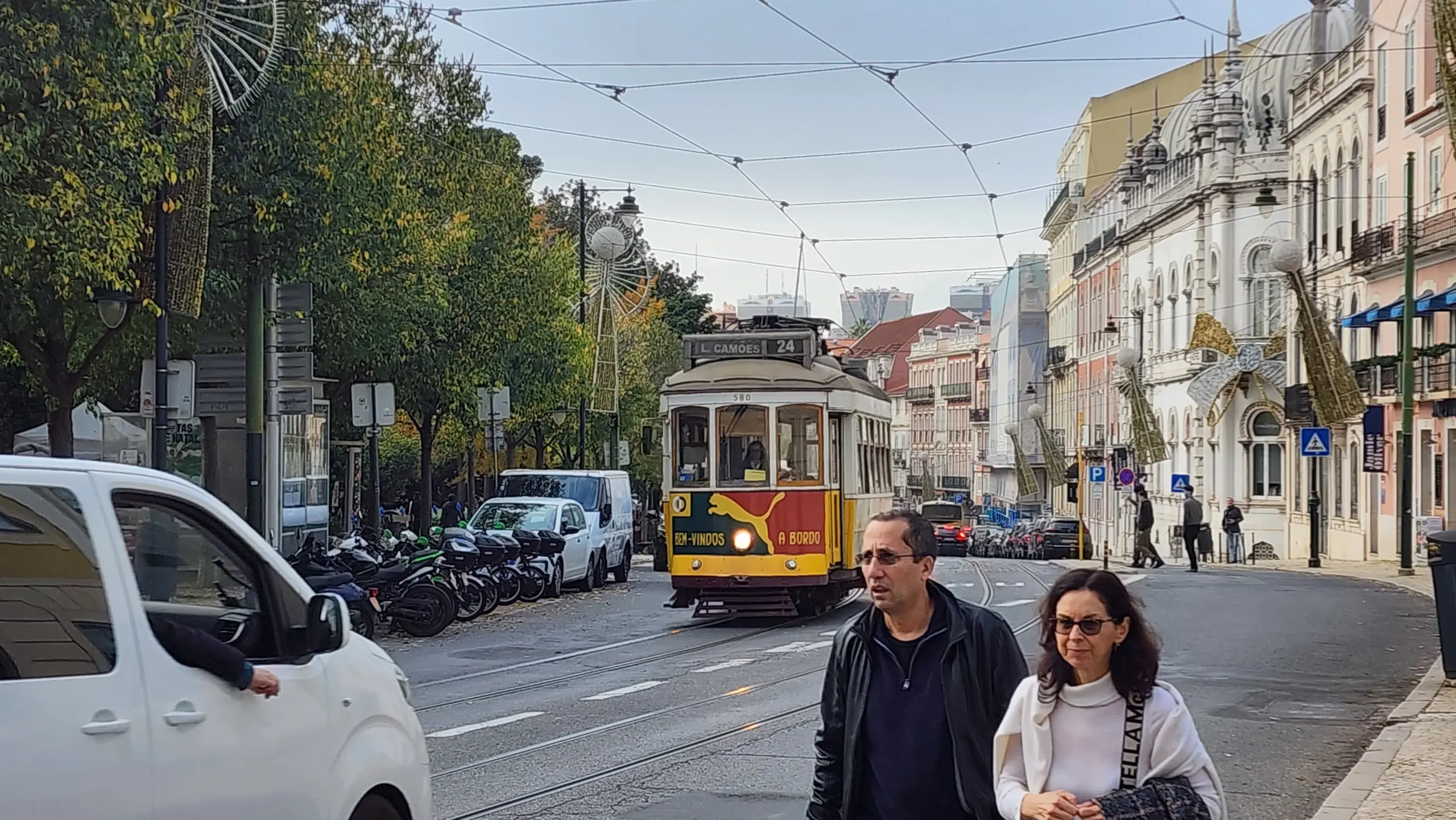
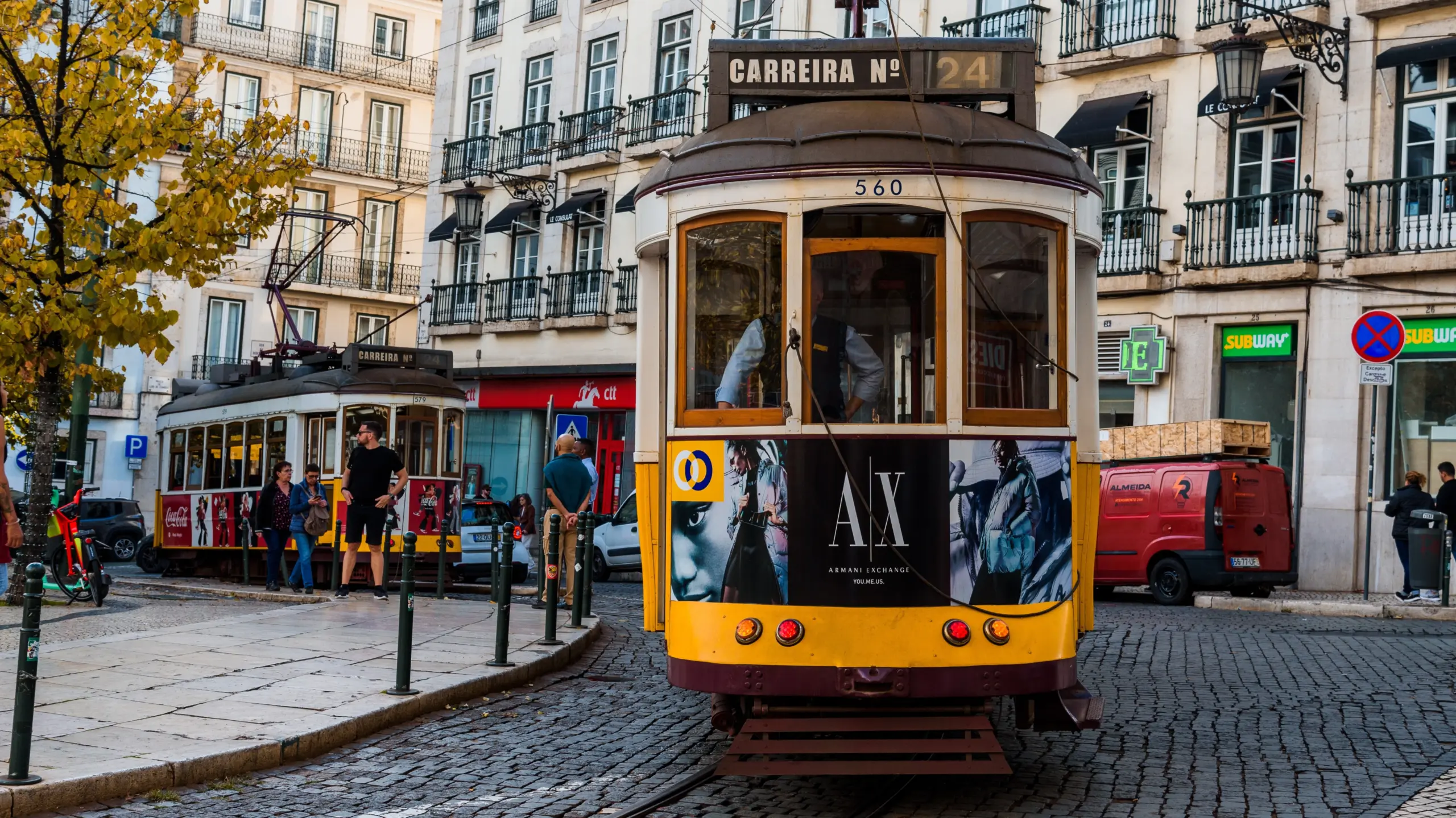
- Tram 24 climbs from Chiado through the elegant Príncipe Real neighborhood up to Campolide – a gorgeous route often overlooked by tourists, offering stunning views and a quieter experience.
Each ride reveals a different facet of Lisbon: seaside calm, urban energy, or romantic hills glowing in warm sunlight.
Why Lisbon’s Trams Feel So Magical
What struck me most is how alive the trams are. Locals hop on with groceries or greet the driver by name. Tourists press their faces to the window, trying to capture every turn. Children sit on edge of their seats as the tram climbs almost impossibly steep inclines. There is a gentle hum, a bell that chimes like a heartbeat, and a steady rhythm that makes you slow down. You’re not rushing, you’re feeling the city. Sometimes, as the tram curves uphill, the river appears between rooftops like a ribbon of silver. Other times, sunlight catches the azulejos and scatters blue reflections onto the windows. These are the moments that stay with you – tiny snapshots of Lisbon’s beauty.
Photographing the Trams – Pure Lisbon Aesthetic
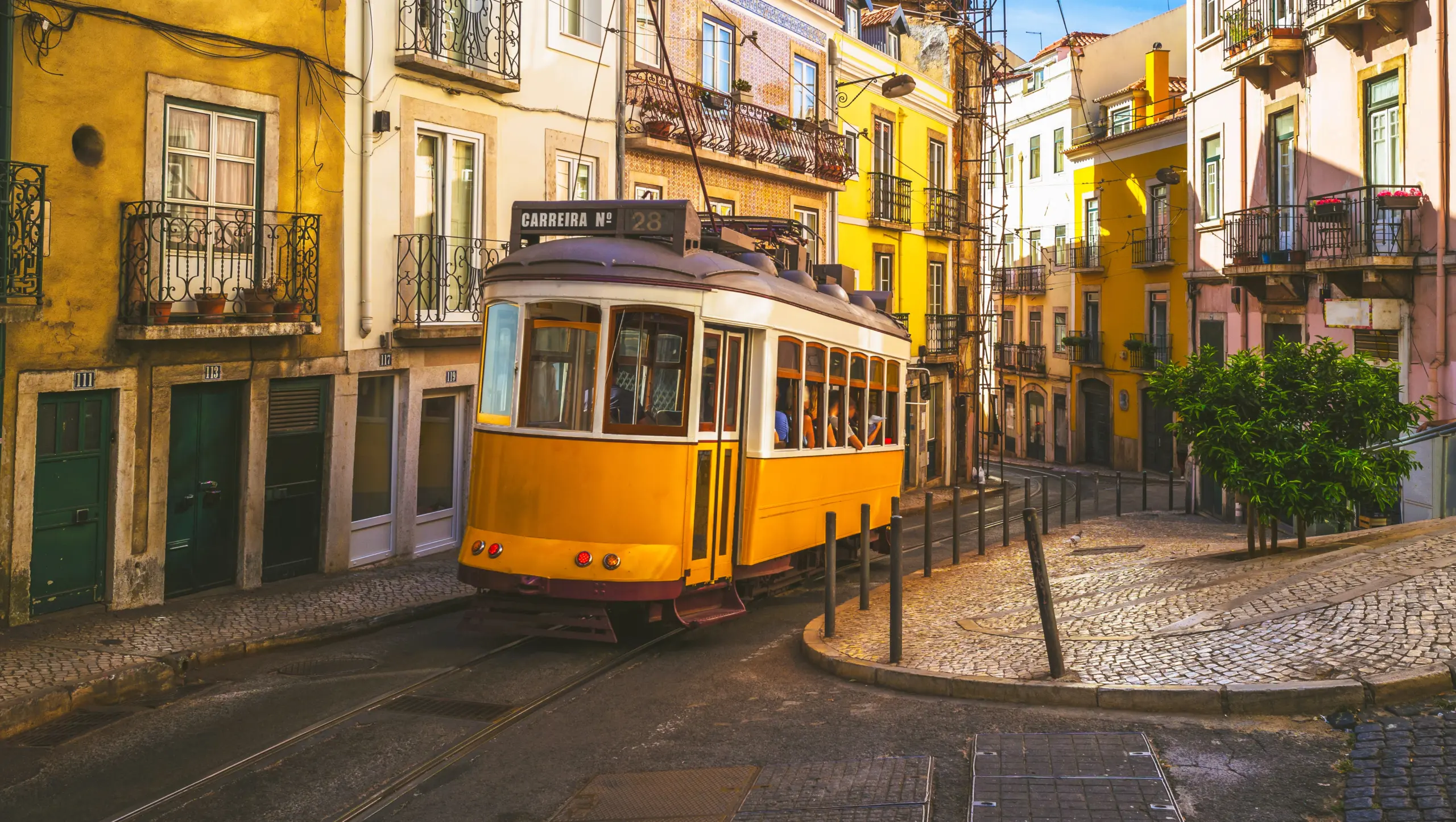
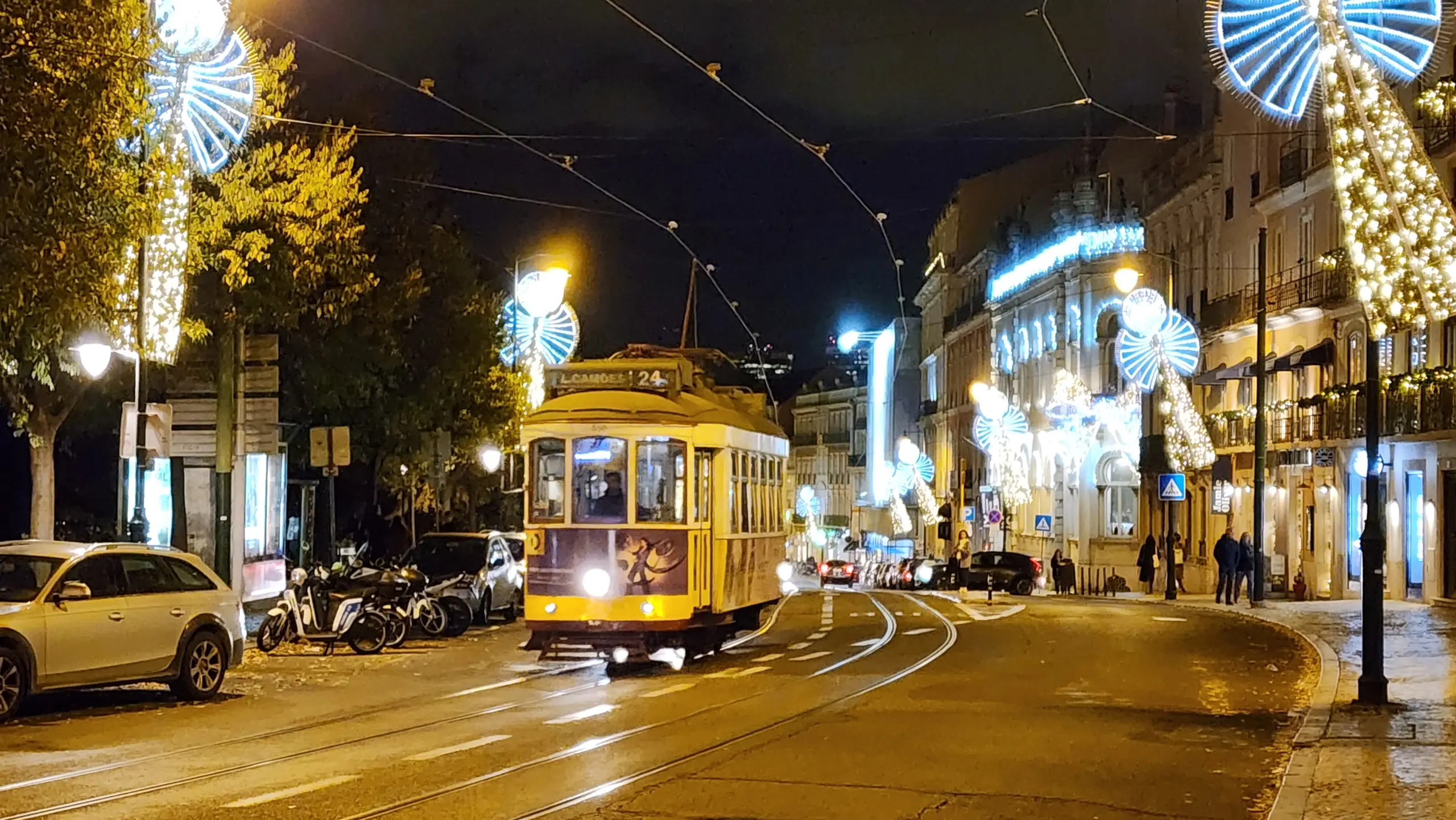
If you love photography, Lisbon’s trams are a dream to capture. Their vintage yellow bodies contrast beautifully with the city’s pastel houses, patterned stone stairways, blue-and-white azulejo façades, and steep cobblestone streets that curve and climb in every direction. Some of the most magical moments happen when bougainvillea spills over balconies above the rails, framing the trams like scenes from an old postcard. Golden hour brings out the richest colors – the yellows deepen, the tiles glow softly, and the entire street feels bathed in honeyed light. At night, the trams become cinematic as their warm interior glow reflects on the metal tracks and cobblestones below. Every angle, every turn, every hill seems designed for a photograph; your camera roll will fill up faster than you expect.
Bubbly Tips
- Best time to ride Tram 28: Early morning or late evening to avoid crowds
- For quieter rides: Choose Tram 12 or 24 – gorgeous and underrated
- Safety tip: Watch your belongings on crowded trams
- Photo Tip: The curve near Largo das Portas do Sol is one of the best tram photo spots in Lisbon
- Ticket Tip: You can use the Viva Viagem card for tram rides (cheaper than buying onboard)
Final Thoughts
Lisbon’s trams are more than transportation, they’re experiences. They carry history, nostalgia, laughter, sunlight, and the rhythm of a city that invites you to slow down and savor every moment. Riding them made me fall in love with Lisbon in a deeper, more intimate way, and I hope they do the same for you.
Have you ever taken a Lisbon tram, and if so, which route was your favorite? Share your story below – I love hearing your travel memories!
xoxo,
Bubbly 🚋